
Signs of Hard Water Damage on Skin and Hair

Last Updated: November 7, 2026
Quick Summary
Hard water damage shows up as dry, tight, itchy skin after washing and as dull, rough, tangled hair that breaks and fades in color. The cause is calcium and magnesium in the water forming soap scum that coats skin and hair with a mineral film. You can confirm it at home with a test strip or soap test.
Calcium and magnesium bind with soap to create soap scum that clings to skin, hair, and shower walls.
Tight, squeaky skin after a shower means barrier oils came off with the soap scum, not that skin is clean.
Mineral buildup roughens the hair cuticle, causing dullness, frizz, tangles, and more breakage.
Chelating shampoos bind minerals so they rinse away, but they do not change the water itself.
Whole-home softeners remove calcium and magnesium through ion exchange and fix hardness at the source.
Wondering if hard water is behind your skin issues?
We test your home's water for free and explain the results in plain language.
Table of Contents
How Hard Water Leaves Mineral Residue on Skin and Hair
Hard water damage starts with two minerals: calcium and magnesium. Water picks these up as it moves through rock and soil, and they stay dissolved until the water evaporates. That is why the residue shows up on your skin, your hair, and your fixtures.
This guide explains the signs of hard water damage on skin and hair, how to confirm the cause at home, and what actually reverses it. People often blame their shampoo or their lotion when the water is the real problem.
Hard water is water that carries a high concentration of dissolved calcium and magnesium. The minerals themselves are not harmful to drink. The trouble starts when they meet soap.
Soap and shampoo are designed to latch onto oils and rinse away. In hard water, calcium and magnesium bind with soap first. That reaction creates soap scum, a sticky film that clings to skin, hair, and the shower wall. Less soap does its job, and more of the residue stays behind. You rinse, and you still feel coated.
Three things follow from that chemistry:
Mineral film builds up on skin and hair with every wash
Products stop working the way they should, so you use more of them
The rinse never feels clean, which is the complaint we hear most
The U.S. Geological Survey's water hardness overview explains how hardness is measured and why it varies so much from one water source to the next. The rest of this article shows you what that residue looks like on your body, and what to do about it.
Signs of Hard Water on Skin
Common signs of hard water on skin include dryness, itching, a tight feeling after washing, and a lingering soapy or filmy sensation.
Here is what to watch for, and why each one happens.
Dryness, Itching, and That Tight Feeling After Washing
That tight, squeaky feeling after a shower is not a sign of clean skin. It is a sign that your skin's natural oils came off along with the soap scum.
Your skin barrier is the outer layer that holds moisture in and keeps irritants out. Hard water residue can interfere with that layer, and skin may feel dry and itchy after drying.
Watch for these patterns:
Tightness that lasts more than a few minutes after washing
Flaky patches that return even after moisturizing
Itching that gets worse in winter, when indoor air is already dry
A filmy feeling on your hands after washing them
The tight feeling is the earliest and most reliable sign. If your skin feels stiff until you apply lotion, the water is a likely suspect.
Redness, Irritation, and Clogged Pores
Mineral residue can trap oils and dead skin cells, which may contribute to clogged pores along the hairline, back, and shoulders.
Some people also notice mild dermatitis-like patches, especially where skin folds or where clothing rubs. A common mistake is treating this as an acne problem and buying stronger cleansers. Harsher products strip the barrier further and make the irritation worse.
Signs of Hard Water on Hair
Signs of hard water on hair include dullness, roughness, tangles, breakage, and color that fades faster than expected. Hair feels coated rather than clean, and styling becomes harder because the cuticle stays rough.
Dullness, Frizz, Tangles, and Breakage
Healthy hair has a smooth cuticle that reflects light. Mineral buildup coats that cuticle and roughens it. The result is hair that looks dull instead of shiny, frizzes in humidity, and tangles the moment you touch it.
Dry, brittle strands snap more easily. You may notice split ends sooner after a trim, and more shedding in the shower drain. Hair texture changes too: strands feel coarser and heavier, yet still dry.
A common mistake is layering on more conditioner. Extra product coats rough hair temporarily, but it also adds to the buildup. In practice, the hair keeps getting worse while your shower shelf fills up.
Color Fading, Brassiness, and a Flaky Scalp
Mineral deposits can push blonde and gray tones toward brassiness and make browns look flat. Color fades sooner because the cuticle does not hold pigment as well when it is coated.
The scalp tells its own story. Residue and product buildup can leave the scalp dry and flaky, and the flakes look like dandruff even when they are not. Some people also find their roots look greasy while the ends stay dry, because the scalp overproduces oil to compensate for the stripping effect.
A Practical At-Home Checklist to Confirm Hard Water
You can confirm hard water at home in about ten minutes with a test strip or a simple soap test. Neither replaces a lab analysis.
Run through this checklist:
Look at your fixtures. White crust around the faucet base, showerhead, or tub spout points to calcium and magnesium.
Check your glassware. Cloudy spots that do not wash off after dishwashing are mineral residue.
Try the soap test. Add a few drops of pure liquid soap to a glass of tap water and shake. Weak, slow lather with no suds means hard water.
Look for soap scum. A chalky film on the shower door or tub ring is the classic sign.
Test with a strip. A hardness test strip changes color; match it to the chart on the package.
Check your appliances. Scale in the kettle and a stiff heating element are clues.
Review your water report. Your utility's annual water quality report lists hardness and other measurements.

If two or more boxes are checked, hardness is likely part of your problem. The next step is a proper water test, because hardness is only one thing worth measuring.
How to Reverse the Effects of Hard Water on Skin
Reversing hard water effects on skin comes down to three moves: reduce contact with the minerals, restore the barrier, and stop over-washing. You cannot fix the water from the shower shelf, but you can limit the damage while you sort out treatment. What most guides skip is matching the response to the specific symptom, because tightness, redness, and breakouts do not all need the same fix.
Match the Step to the Symptom
Use this symptom-to-action guide to decide where to start. Each row pairs a sign with a proportionate next step, so you are not buying a softener for a problem a cleanser change would solve.
Symptom | Likely Mechanism | First Step | Next Step If It Persists |
Tight, squeaky skin after washing | Barrier oils stripped along with soap scum | Switch to a gentle, fragrance-free cleanser and shorten showers | Test water hardness; consider a shower filter for sediment and chlorine |
Itching within an hour of toweling off | Residual mineral film interfering with the barrier | Pat dry and moisturize within three minutes with a ceramide or glycerin product | Check whether itching tracks with water source (home vs. elsewhere) |
Redness and sensitivity | Irritation from residue and repeated stripping | Cut back to one lukewarm shower daily; stop harsh exfoliants | See a dermatologist if redness spreads or persists after water changes |
Clogged pores along hairline, back, shoulders | Film trapping oils and dead skin cells | Rinse those areas last and thoroughly; avoid heavy body lotions | Rule out product buildup before assuming acne |
Flaking patches that return after moisturizing | Barrier disruption plus residue | Use a barrier-repair moisturizer twice daily | Have water tested; flaking that spreads may be a separate condition |
A common pattern is that people treat the visible symptom with a stronger product, which strips the barrier further. The residue comes first and the irritation follows, so the fix belongs in the water and the cleansing routine, not in a harsher face wash.
Reduce Contact With the Minerals
Shorten showers. Keep them under ten minutes and use lukewarm water, not hot. Heat accelerates oil loss and evaporation.
Use a gentle, fragrance-free cleanser. Skip harsh soaps that strip oils further. Bar soaps can leave more scum in hard water than syndet (synthetic detergent) bars or body washes.
Rinse thoroughly. Pay attention to the back, shoulders, and hairline where residue collects.
Wash your face last. By then, the residue has had time to rinse away, and you are not leaving cleanser on skin while you finish the rest of your routine.
Pat dry, then moisturize within three minutes. This locks in water before it evaporates.
Choose a moisturizer with ceramides or glycerin. These support the skin barrier rather than just coating it.
Wipe down fixtures weekly. It keeps scum from spreading to towels and surfaces.
Watch out: layering on heavier lotions to fight tightness can trap residue against the skin and worsen clogged pores. If moisturizer stops helping, the problem is likely upstream in the water.
What Actually Fixes the Water
Shower filters and whole-home treatment are not interchangeable. Here is how the options compare on what they can address:
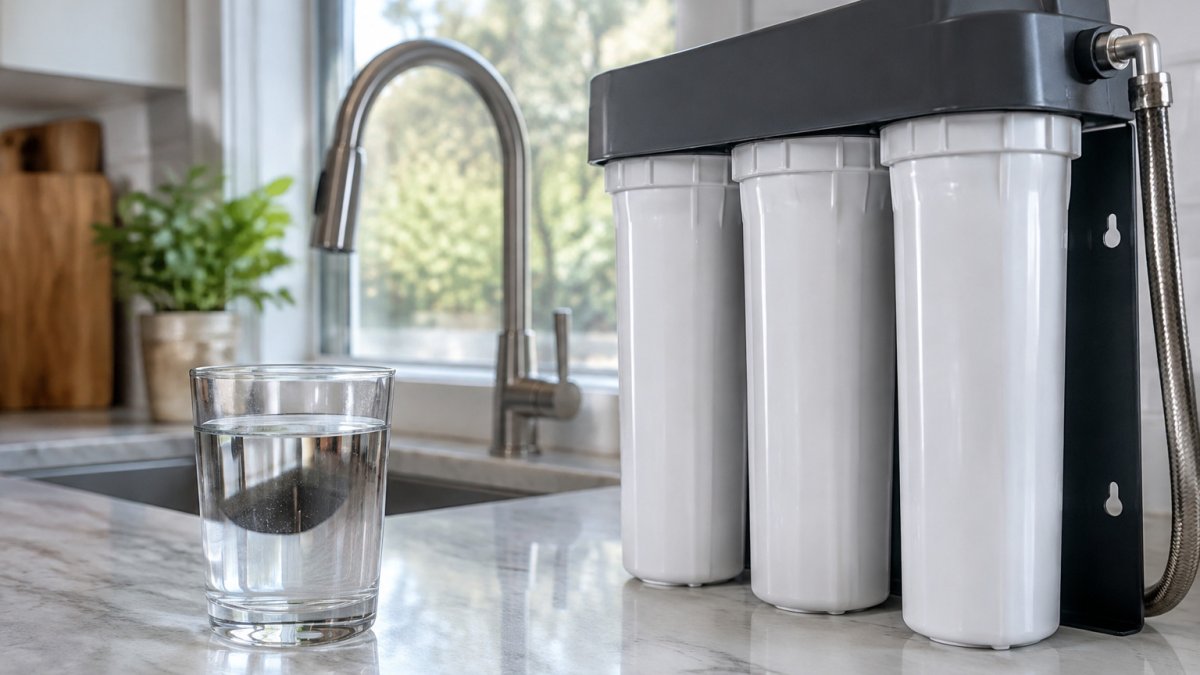
Shower filters typically target chlorine, chloramine, and sediment. They can reduce odor and some irritation, but they generally do not soften water. Cartridges need replacement on a schedule, often every few months, and performance drops as they load up.
Chelating body washes and shampoos bind minerals so they rinse away. They help with residue on the body and hair but do not change the water itself, so you keep needing them.
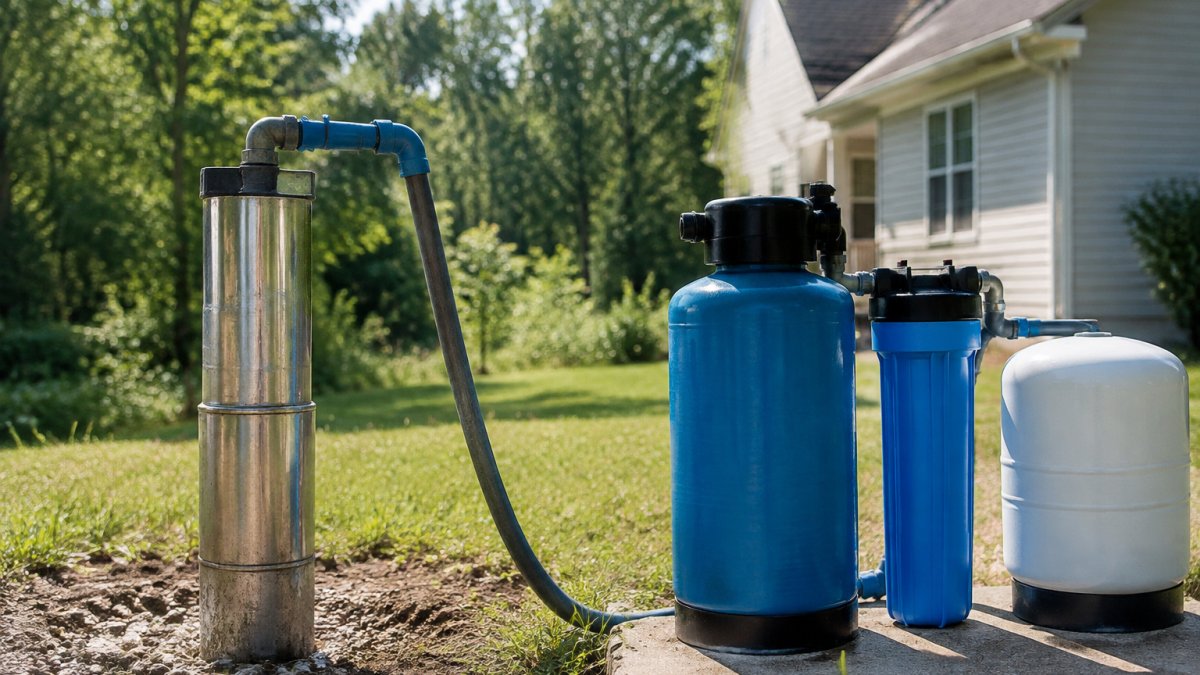
Whole-home water softeners remove calcium and magnesium through ion exchange and address hardness at the source. They require salt or potassium refills, periodic maintenance, and a higher upfront cost, and they are the durable fix if hardness is confirmed.
If irritation persists despite these steps, see a dermatologist to rule out other causes such as eczema, contact dermatitis, or a reaction to a specific product.
How to Reverse the Effects of Hard Water on Hair
Reversing hard water effects on hair means removing the buildup first, then protecting the hair from further deposits. The order matters. Conditioning coated hair just adds another layer. The stronger version of this advice separates what is well established, such as residue and dryness, from claims that are less certain, such as hardness directly causing hair loss.
What the Evidence Supports and What It Does Not
Residue, roughness, dullness, tangles, and dryness are well-recognized effects of mineral buildup on hair. Breakage and split ends are a reasonable consequence of rough cuticles and increased friction. Claims that hard water directly causes hair loss are less certain than claims about residue and breakage. Treat hardness as a contributor to texture and buildup, not as a proven cause of hair loss.
Match the Routine to the Problem
Different symptoms call for different routines. Use this guide to pick the right approach rather than applying one clarifying wash to every problem.
Symptom | Likely Mechanism | Routine | Frequency |
Dull, coated-feeling hair | Mineral film on cuticle | Chelating shampoo, then moisturizing conditioner on mid-lengths and ends | Once a week |
Frizz and tangles | Roughened cuticle | Cooler final rinse; leave-in conditioner on ends | Every wash |
Breakage and split ends | Friction from rough cuticle | Trim split ends; reduce heat styling; chelate weekly | Weekly until reset, then as needed |
Brassiness in blonde or gray | Mineral deposits affecting tone | Chelate before color appointments; ask stylist about toner-safe options | Before each appointment |
Flaky, dry scalp | Residue and product buildup | Clarify scalp weekly; avoid heavy root products | Weekly |
Greasy roots, dry ends | Scalp oil overproduction compensating for stripping | Gentle shampoo at roots; conditioner on ends only | Every wash |
The Wash Routine That Works
Use a chelating or clarifying shampoo once a week. Chelating shampoos bind to minerals so they rinse away. Clarifying shampoos remove product buildup but may not address minerals as effectively.
Leave it on for a few minutes before rinsing, following the product directions.
Follow with a moisturizing conditioner on the mid-lengths and ends only.
Rinse with cooler water at the end of the wash to smooth the cuticle.
Cut back on heat styling while you reset the hair.
Trim split ends rather than trying to repair them.
Space out clarifying washes so you do not strip the hair between treatments.
Watch out: clarifying too often can dry out hair that is already brittle. Once a week is usually enough, and less if your hair is fine or already dry. For color-treated hair, ask your stylist before adding a chelating product, since some can affect toner.
Treatment Trade-Offs for Hair
Chelating shampoos address minerals on the hair but do not change the water, so results fade between uses. They are the lowest-cost, lowest-commitment option.
Shower filters mostly target chlorine and sediment rather than hardness, so they may help with odor and some irritation but will not stop mineral deposits. Cartridges need regular replacement.
Whole-home softeners remove hardness at the source and reduce deposits on hair over time. They carry upfront cost, salt or potassium refills, and maintenance, but they are the durable fix if hardness is confirmed.
If breakage or shedding continues despite a consistent routine, see a dermatologist or stylist to rule out other causes before assuming the water is responsible.
Reading Your Water Hardness Numbers and What They Mean
Water hardness is measured in grains per gallon or milligrams per liter, which is the same as parts per million. The higher the number, the more calcium and magnesium the water carries.
Use this guide to interpret a test result:
Hardness Level | Grains per Gallon | Milligrams per Liter | What It Means at Home |
Soft | Under 1 | Under 17 | Little residue; soap lathers easily |
Slightly hard | 1 to 3.5 | 17 to 60 | Mild film; most people notice nothing |
Moderately hard | 3.5 to 7 | 61 to 120 | Visible scum; skin and hair symptoms common |
Hard | 7 to 10.5 | 121 to 180 | Scale on fixtures; appliances need attention |
Very hard | Over 10.5 | Over 180 | Heavy scale; treatment worth considering |
These ranges follow the USGS classification of water hardness. Test results can vary by season and water source, so a single reading is a snapshot, not a verdict. If your number lands in the moderately hard range or above and your symptoms match this article, hardness is a reasonable place to start.
When Symptoms Point to Something Other Than Hard Water
Not every skin or hair problem is hard water damage. Hardness explains residue, tightness, and buildup. It does not explain sudden rashes, severe itching, or symptoms that appear only in one room of the house.
Consider other causes when you notice:
A rash or hives that appears quickly after contact
Symptoms that persist after you stop showering at home
Flaking that spreads beyond the scalp or hairline
A metallic or chemical taste in the water, which points to other issues
Sediment or discoloration in the water itself
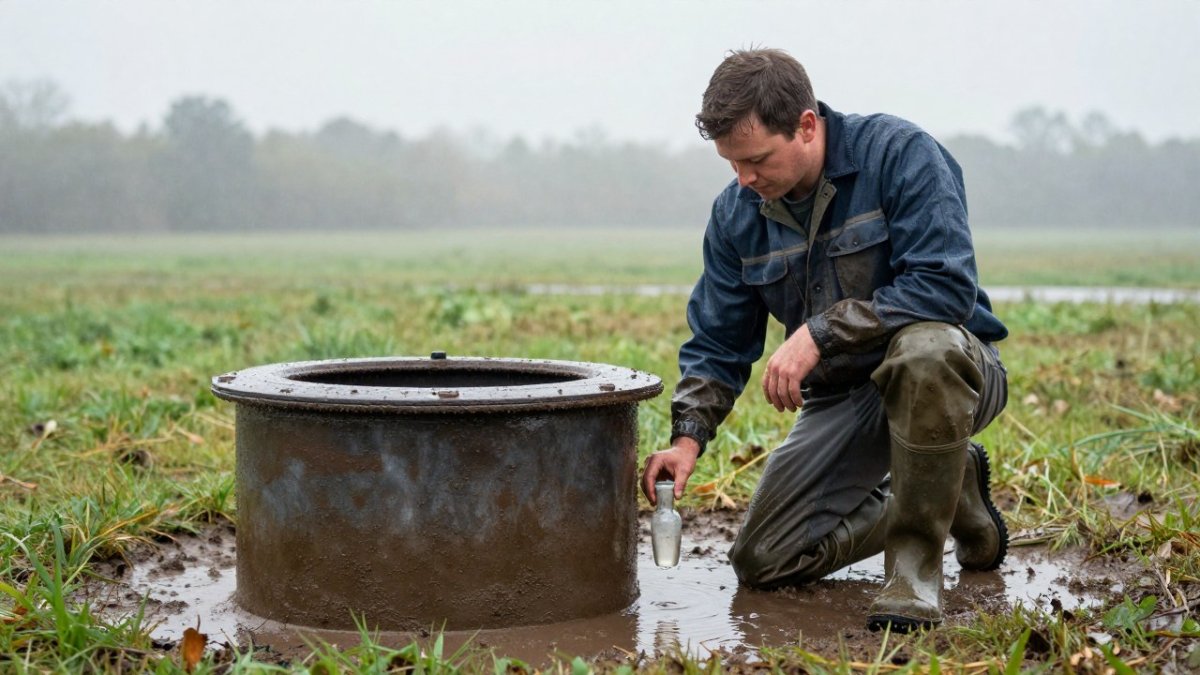
Municipal water can carry chlorine, chloramine, and other treatment chemicals, and private wells can carry minerals, metals, or bacteria that hardness testing will not catch. The EPA's guidance on private well testing is a useful starting point if your home draws from a well.
If symptoms are severe, painful, or getting worse, talk to a doctor or dermatologist. Water quality is one variable among several, and it is worth ruling out the others. For more on local water concerns, browse our water quality articles.
Book a Free Water Test Before You Buy Any Treatment
You cannot choose the right treatment until you know what is in your water. That is why we start every project with testing, not with a filter recommendation.
Bevilacqua Pure offers a free in-home water test and explains the results in plain language. Recommendations are built around your results rather than a one-size-fits-all package.
If you are ready to confirm what is causing the residue on your skin, hair, and fixtures, book a free water test and get a clear answer before you spend anything on treatment.
Hard water damage is fixable, but only once you know what your water contains. Guessing leads to wasted money on filters that do not address the problem. Bevilacqua Pure offers free in-home water testing, a plain-language review of your results, and a pressure-free consultation so you can decide with facts in hand. Get started with Bevilacqua Pure and find out exactly what is coming out of your taps.
Frequently Asked Questions
How can you tell if your hair is damaged from hard water?
Look for changes that started after you moved or after your water source changed: hair that feels coated or waxy after rinsing, dries into frizz and tangles more easily, snaps when wet, and loses shine. Color-treated hair may fade faster or turn brassy. These are common signs of hard water on hair, but they can also come from heat styling or product buildup, so confirm with a water hardness test before blaming your routine.
How do you heal your skin from hard water?
Start by reducing contact time: keep showers short and use lukewarm water, then moisturize within a few minutes of patting dry while skin is still damp. A gentle, non-stripping cleanser helps protect the skin barrier. If hardness is confirmed, a shower filter or whole-home treatment removes the minerals at the source. Persistent redness, cracking, or itching that does not improve deserves a dermatologist's opinion, since hard water damage can mimic other conditions.
What shampoo helps remove hard water buildup from hair?
Chelating and clarifying shampoos are the two options. Chelating shampoos contain ingredients that bind calcium and magnesium so mineral deposits rinse away, while clarifying shampoos strip product buildup and soap residue. Chelating shampoos can help with mineral residue, and a moisturizing conditioner helps offset any dryness.
Can hair grow back after hard water-related hair loss?
Hard water is not established as a direct cause of hair loss. Hair can look thinner when breakage occurs along the strand. If you notice scalp-level shedding, widening part lines, or patches, see a doctor to identify the cause.
Comments