
Common PFAS Sources in Massachusetts Wells: A Homeowner's Guide

Last Updated: November 4, 2026
Quick Summary
Common pfas sources in Massachusetts wells include firefighting foam used at airports, military bases and fire-training grounds, plus manufacturing releases, landfills, spills and septic or wastewater discharges. Groundwater carries these chemicals toward nearby wells, so a source miles away can still affect your water.
Firefighting foam used at airports, military bases and fire-training grounds is a major source.
Repeated foam use at training pads builds up PFAS that migrate slowly through groundwater.
Testing with a certified laboratory is the only reliable way to confirm PFAS in your well.
A PFAS detection shows presence in your water, not where the chemicals originated.
Ask your state environmental agency whether nearby sites have groundwater monitoring data.
Table of Contents
Many Massachusetts homeowners who rely on private wells are surprised to learn that PFAS, often called forever chemicals, can reach groundwater from sources miles away. This guide walks you through the most common PFAS sources in Massachusetts wells, how those chemicals travel underground, and what to do if your results come back positive. Knowing where contamination usually starts helps you decide whether testing is worth doing now.
PFAS, or per- and polyfluoroalkyl substances, are a large family of man-made chemicals used for decades in products that resist water, grease and heat. They are called forever chemicals because they break down very slowly in soil and water. That persistence is why a release from years ago can still show up in a well today.
What PFAS Are and Why They Persist in Groundwater
PFAS are a group of thousands of synthetic compounds. They do not break down easily in the environment, so they build up over time (the EPA).
Here is why they stick around:
Strong chemical bonds: The carbon-fluorine bond is one of the strongest in chemistry.
Slow movement: Many PFAS move slowly, but they keep moving through soil and groundwater.
Little natural breakdown: Sunlight, bacteria and water do not remove them quickly.
Because of this, a small release can spread far from where it started.
How Firefighting Foam and Fire Training Areas Contaminate Wells
Aqueous film-forming foam, usually shortened to AFFF, has long been used as a suppressant for fuel fires at airfields, military bases, refineries and fire-training grounds. Older AFFF formulations contained PFAS compounds, notably PFOS and PFOA, that were designed to spread a thin film over burning fuel. When the foam was sprayed during training exercises, it soaked into soil and pavement, and rain and snowmelt carried the chemicals downward toward the water table.
The reason fire-training areas rank among the most frequently investigated PFAS sources is repetition. A single emergency use releases a limited volume, but a training pad may have absorbed foam week after week for years. The PFAS do not degrade in soil, so the mass accumulates and then migrates slowly with groundwater.
How to check for this source near your well
You do not need to prove contamination to justify a look. Use this checklist to identify candidate sites, then treat any finding as a reason to test, not as proof.
Airports and airfields: Look for the airport's stormwater or groundwater monitoring reports, which many publicly operated airports publish. Ask the airport authority whether AFFF was used and whether it has been phased out.
Military installations: Former and active bases are tracked in federal cleanup databases. Search the installation name plus "PFAS" or "AFFF" to find site-specific investigations.
Municipal and volunteer fire department training grounds: Call the department and ask whether a dedicated burn or training pad existed and whether foam was used there.
Refineries, tank farms and fuel-storage terminals: These facilities often maintained their own foam systems and conducted drills on site.
Industrial fire brigades: Large manufacturers sometimes ran their own foam training, so the source can sit inside a plant boundary rather than at a public fire ground.
Watch out: proximity alone does not establish that a site contaminated your well. Groundwater direction, well depth and the geology between the site and your well all affect whether a release can reach you, and a detection of PFAS in your water does not by itself identify where those chemicals originated.
Why the foam source is often confirmed late
Foam releases frequently happened decades ago, before PFAS were regulated or even widely measured. Records may be incomplete, and the responsible facility may have changed ownership. That is why investigators often rely on groundwater monitoring wells, soil sampling and chemical fingerprinting rather than on paperwork alone. If a nearby site has monitoring data, ask the state environmental agency whether those results are public and whether any wells near you have been sampled.
For a well owner, the practical takeaway is simple: if a fire-training area, airport or fuel facility sits in the likely direction of groundwater flow toward your well, testing is a reasonable next step, and the test result, not the map, is what tells you whether your water is affected.
The main places where firefighting foam and related PFAS sources are typically found are summarised below.
Source | What it is | Why it matters for your well |
Airports and airfields | Sites where AFFF was used on fuel fires | Check published stormwater or groundwater reports |
Military installations | Former and active bases tracked in cleanup databases | Search the installation name with PFAS or AFFF |
Fire training grounds | Pads sprayed with foam during repeated drills | Repetition builds up PFAS that migrate slowly |
Refineries and fuel terminals | Facilities with foam systems and on-site drills | Foam drills may have occurred inside the plant boundary |
Industrial fire brigades | Manufacturer-run foam training | The source can sit within a plant, not a public fire ground |
Manufacturing Releases and Industrial Sites
Factories that made or used PFAS in production are another significant source. Releases can happen through wastewater discharge, air deposition or spills.
Manufacturing sites that may have released PFAS include:
Plants that made coatings, textiles or electronics
Facilities that used PFAS in metal plating
Companies that handled chemical waste on site
Air releases can settle onto soil and then wash into groundwater. This means a well does not have to sit directly on an industrial property to be affected.
Landfills, Waste Sites, and Chemical Spills
Landfills are a common concern because PFAS are found in many consumer products that end up in trash. Rain moving through a landfill can carry PFAS into the ground.
Waste-related sources include:
Older landfills that accepted industrial or commercial waste
Contaminated waste sites under state cleanup programs
Chemical spills that were never fully cleaned up
If you live near a landfill or a known spill site, ask whether groundwater monitoring has been done nearby.
Septic Systems and Wastewater Discharges
Septic systems and wastewater plants can also be pathways for PFAS. Household products that contain PFAS go down the drain, and many treatment systems do not remove them completely.
Common wastewater-related sources include:
Septic systems in areas with many older homes
Treatment plants that discharge effluent to rivers or ground
Biosolids spread on farmland
Because septic systems sit on your own property, they are a source you can check directly.
How PFAS Gets Into Groundwater and Travels to Your Well
Understanding the pathway from a release site to your tap explains why two wells on the same road can produce very different results, and why a source that looks close on a map may or may not be the one affecting you.
The path, step by step
Release at or near the surface. Foam, industrial discharge, landfill leachate or a spill deposits PFAS onto soil, pavement or surface water.
Infiltration. Rain and snowmelt dissolve the chemicals and carry them down through the unsaturated soil. Some PFAS bind to soil particles and move slowly; others are more mobile and travel faster.
Entry into the aquifer. The chemicals reach the saturated zone, the water-bearing layer that supplies wells, and begin moving with the groundwater.
Capture by a well. A pump creates a zone of influence around the well screen, drawing water, and any dissolved PFAS in it, upward into the home.
Why direction and depth matter
Groundwater flows, generally following the slope of the water table, from higher recharge areas toward lower discharge areas such as streams and wetlands (General Facts and Concepts about Ground Water). A site is described as upgradient when it sits in the direction the water is coming from, and downgradient when it sits past your well. An upgradient source is the one worth investigating first; a downgradient site is less likely to reach you, though pumping and geology can complicate that rule of thumb.
Well depth and construction matter too. A shallow well screened near the water table may intercept a contaminant plume that a deeper well finished in a different layer never touches. A well with a long screened interval can draw water from several layers at once, blending results. That is one reason a single detection does not tell you which source produced it.
Why nearby wells can differ
Different screen depths may tap different water-bearing zones.
Different pumping rates create different capture zones around each well.
Soil and bedrock layers can channel flow unevenly, so a plume may pass one property and miss the next.
Timing matters: PFAS move slowly, so a release may not have reached every well yet.
Watch out: a PFAS detection confirms that the chemicals are present in your water, not where they came from. Source attribution generally requires investigation, reviewing site records, groundwater monitoring data and, in some cases, chemical fingerprinting, and is best done with the state environmental or health agency rather than inferred from a map.
What this means for your next step
Use the pathway to prioritize, not to conclude. Identify candidate sources in the upgradient direction, note your well depth and construction from your driller's report if you have it, and then test. If a result is positive, share the lab report and your well details with the state agency so the source question can be investigated with real data.
Using a PFAS Contamination Map to Check Your Location
Maps of known PFAS sites can help you see whether your home is nearby. Start with the state environmental agency, which tracks many contaminated sites and cleanup efforts.

When you review a map, look for:
Sites within a few miles of your home
Sites upgradient from your well, meaning the direction groundwater flows
Industrial, fire training or landfill locations
A map alone cannot confirm contamination. It shows where to look, and testing shows what is actually in your water.
PFAS Well Water Testing: Confirming Likely Sources
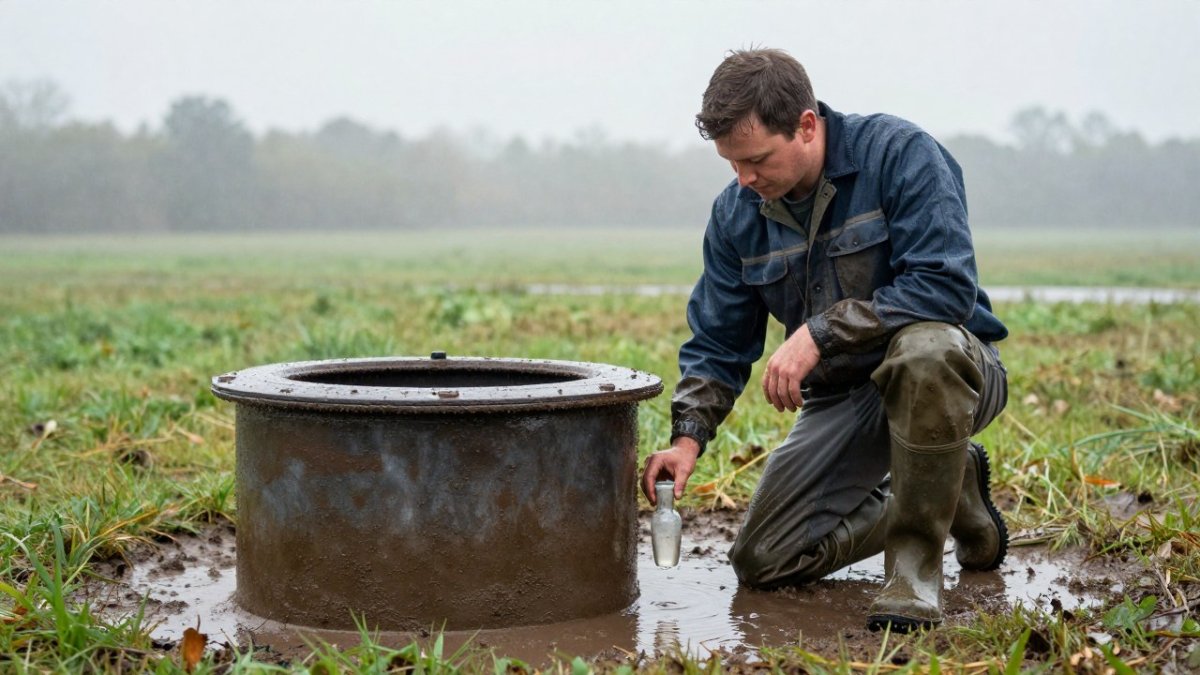
Testing is the only way to know what is in your well. A certified laboratory can measure PFAS levels in a water sample.
Good testing practice includes:
Using a certified lab that tests for PFAS
Following the sample instructions exactly
Testing before and after treatment if you install a filter
Test results show concentrations, which you can compare with state and federal drinking water guidance. A free in-home water test and plain-language explanation of results are available from Bevilacqua Pure, so you know what the numbers mean for your household.
Your Next Steps After a Positive Result and PFAS Removal Options
A positive result does not mean you must panic. It means you should act with care. Start by reading the full lab report and noting the PFAS levels measured.
Practical next steps include:
Contact your state environmental or health agency for guidance
Avoid using the water for drinking or cooking until you have a plan
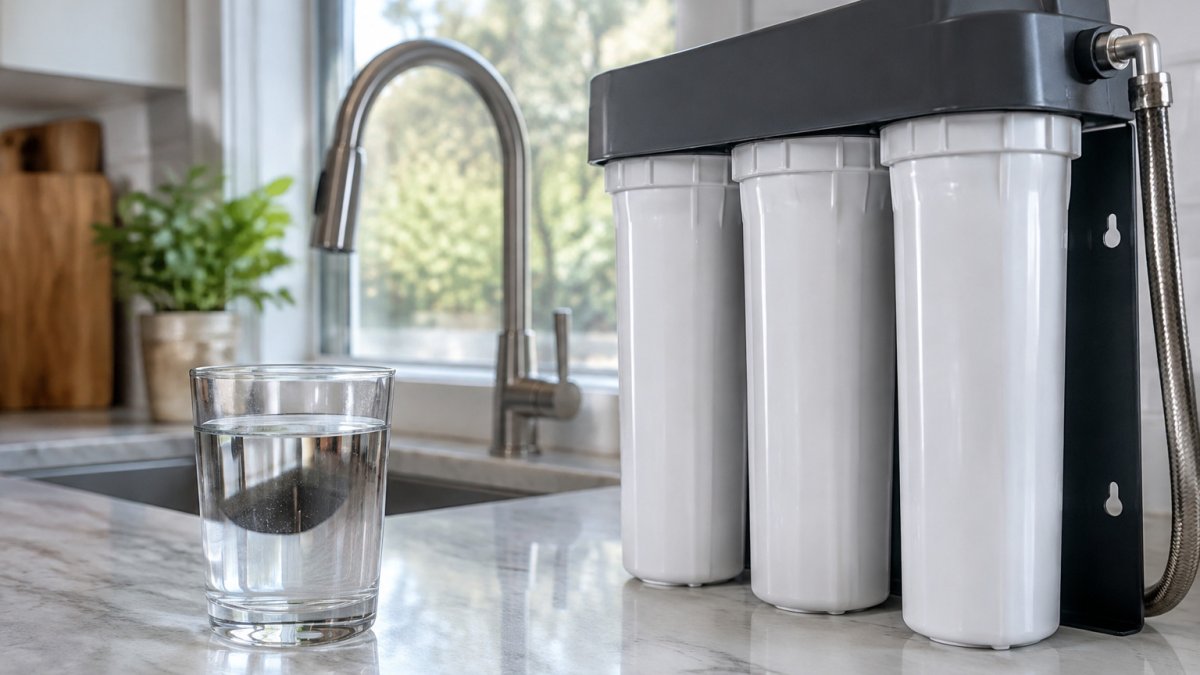
Consider a treatment system matched to your water, and check whether a whole-house system removes PFAS and heavy metals before you decide.
Several treatment methods can reduce PFAS in well water. The best choice depends on the chemicals present and their concentrations. Bevilacqua Pure designs whole-home water filtration solutions, and evaluates your water source and household needs before recommending anything. Book your free water test to start with clear information about your water.
Frequently Asked Questions
What causes PFAS in Massachusetts wells?
PFAS usually come from firefighting foam, manufacturing releases, landfills, spills and wastewater discharges. Groundwater then carries the chemicals to nearby wells.
How do I know if my well has PFAS?
The only reliable way is testing with a certified laboratory. Maps can show nearby sites, but they cannot confirm what is in your water.
Can PFAS travel far from the source?
Yes. Groundwater can move PFAS over long distances and over many years, so wells some distance from a source can still be affected.
Frequently Asked Questions
How common is PFAS in well water?
PFAS detection in private wells varies widely depending on proximity to known sources such as fire training areas, airfields, manufacturing facilities, and landfills. Wells located far from these sites are less likely to show detectable levels, but no well is automatically safe. The only reliable way to know is to test the water using a laboratory that analyzes for PFAS compounds. Homeowners near any of the potential sources described in this guide should consider testing even if their water looks, tastes and smells normal, since PFAS has no visible signs.
What are the main sources of PFAS contamination?
The most common sources include aqueous film-forming foam used at airfields and fire training areas, manufacturing and industrial releases, landfills and contaminated waste sites, septic systems and wastewater discharges, and certain consumer products. Each source leaves a different footprint, so the location of your well relative to these sites matters more than the source type alone. Checking nearby land uses and historical activity is a practical first step in assessing your risk.
Can you remove PFAS from well water?
Yes. Several treatment technologies can reduce PFAS at the point of use, such as a kitchen tap used for drinking and cooking. Effectiveness depends on the specific compounds present and the system design, so a water test should guide the choice. Bevilacqua Pure can review your test results and recommend a treatment approach suited to your home. Pricing depends on the system and installation requirements, so contact Bevilacqua Pure directly for a current quote.
What should I do if my well water tests positive for PFAS?
Start by reviewing the full lab report and confirming the compounds and concentrations detected. Next, identify possible nearby sources using local records and maps, and consult your local health department or the Massachusetts Department of Environmental Protection for guidance on next steps. A follow-up test can help confirm results before you commit to a long-term treatment plan.
Comments