
Lead Removal Water Filtration Options for Your Home

Last Updated: November 8, 2026
Quick Summary
Certified pitchers, faucet-mounted and under-sink filters, whole-house systems, and reverse osmosis are the main lead removal water filtration options. Match the filter to your test results and use: point-of-use for kitchen-tap lead, whole-house when lead is widespread. Look for NSF/ANSI Standard 53 certification for lead reduction.
Test your water with a certified lab kit before buying any filter.
The EPA lead action level is 15 parts per billion, but the goal is zero.
Point-of-use filters cover drinking and cooking water at a single tap.
Whole-house treatment filters every fixture but does not replace a lead service line.
Skipping cartridge changes is the most common reason a filter stops removing lead.
Worried about lead in your tap water?
We test your water, explain the results, and recommend only what your home needs.
Table of Contents
Why Lead in Drinking Water Is Still a Problem in 2026
Lead removal water filtration options matter because lead has no taste, no smell, and no color. You cannot see it in a glass of water. According to the EPA's lead in drinking water guidance, lead enters drinking water mainly through corrosion of pipes, faucets, and fixtures, and there is no safe level of lead exposure. Older plumbing is common in many homes, and testing is the most reliable way to learn what your water contains. The first step is always the same: find out whether lead is actually there.
How Lead Gets Into a Home's Water
Water leaves the treatment plant clean. Lead gets picked up on the way to your tap.
Lead service lines. The pipe running from the street to your home may be lead.
Lead solder. Homes built before the late 1980s often used lead solder on copper pipes.
Brass fixtures. Older faucets and valves can contain lead that leaches over time.
Soft, acidic water. This type of water corrodes pipes faster, pulling more lead into the supply.
How Much Lead Is Too Much
The EPA sets a lead action level of 15 parts per billion (ppb) in drinking water (the EPA). That is a regulatory trigger, not a safety threshold. The EPA's goal for lead is zero. Any detectable lead is worth addressing, especially in homes with young children or pregnant residents.
How to Test Water for Lead Before You Buy Anything
Test before you shop. A filter bought without a test may target the wrong problem entirely.
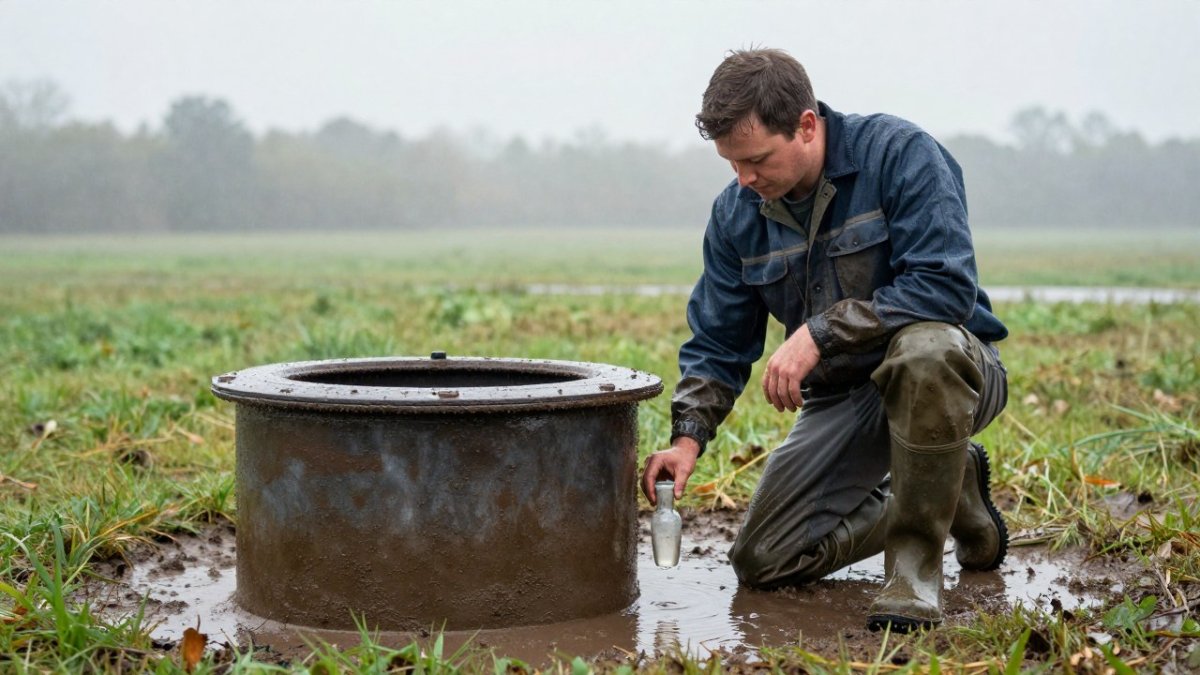
Start with your utility's annual water quality report. It shows system-wide results, but it cannot tell you what your specific plumbing adds. For that, you need a sample from your own tap.
How to test water for lead at home:
Use a certified lab test kit, not a hardware store strip. Strips are not reliable for lead at low levels.
Collect a "first draw" sample: water that sat in the pipes at least six hours.
Follow the lab's instructions exactly on bottle type and timing.
Test a second sample after flushing if the lab recommends it.
Compare results against the 15 ppb action level.
Reading Your Results: Parts Per Billion and Action Levels
Parts per billion is a tiny unit. One ppb is roughly a drop in an Olympic-size swimming pool.
Result | What It Means | Sensible Next Step |
Not detected | No lead found at the test's detection limit | Retest if plumbing changes or a new fixture is installed |
Below 15 ppb | Under the action level, but not zero | Consider a certified filter for drinking and cooking water |
At or above 15 ppb | Above the EPA action level | Filter drinking water now and identify the source |
Very high | Likely a lead service line or lead solder | Stop drinking unfiltered tap water and get professional advice |
The Main Lead Removal Water Filtration Options Compared
Three categories cover most homes: pitchers, point-of-use filters, and whole-house treatment. Each removes lead differently, and each carries a different maintenance burden and set of limitations. Compare them on what they can actually address, not on the marketing label.

The woman is American.
Pitchers and Dispensers
Pitchers are the cheapest entry point. A certified pitcher with a carbon block or ion exchange cartridge can reduce lead from drinking water. They work well for one or two people who mainly drink cold water.
The limits are real. You must refill them constantly, cartridges need frequent changes, and they do nothing for cooking water unless you pour it. A common mistake is buying a pitcher that is not certified for lead reduction at all. Check the certification label before you buy.
What it addresses: lead at the drinking glass, plus taste and odor.
What it misses: cooking water, shower and bath water, and any fixture you do not pour from.
Upkeep: cartridge changes every few months depending on capacity and use; the pitcher itself needs regular washing.
Best fit: renters, single occupants, and anyone who wants a low-cost stopgap while a lab test is pending.
Faucet-Mounted and Under-Sink Filters
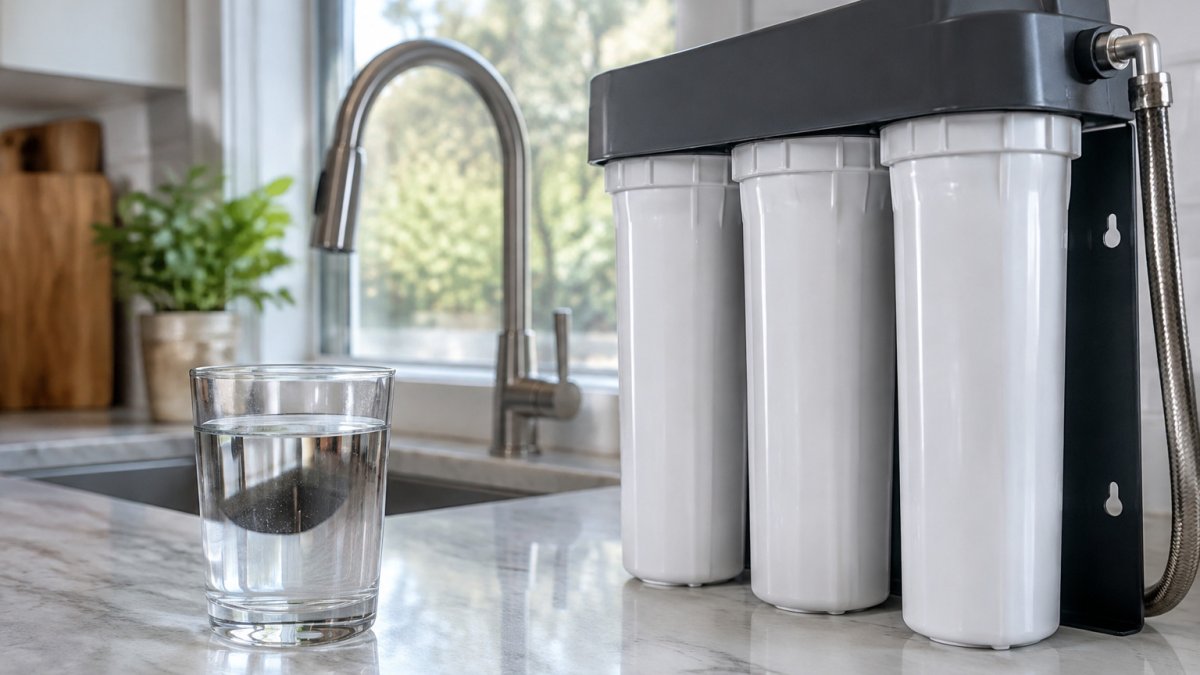
Faucet-mounted and under-sink filters are the practical middle ground. They treat water at the point of use, so they cover both drinking and cooking.
Faucet-mounted: easy to install, low cost, but slows flow and takes up counter space.
Under-sink: hidden in the cabinet, better flow, more cartridge capacity, needs basic plumbing work.
Both handle lead well when certified.
What it addresses: lead at a single tap, including water used for cooking and mixing formula.
What it misses: other taps, the shower, and the washing machine; it also does not fix a corrosive-water cause.
Upkeep: cartridge changes on the maker's schedule; under-sink housings should be checked for leaks after each change.
Best fit: most households where lead is confined to the kitchen tap or where a lab test shows elevated lead at one fixture.
Whole-House Treatment
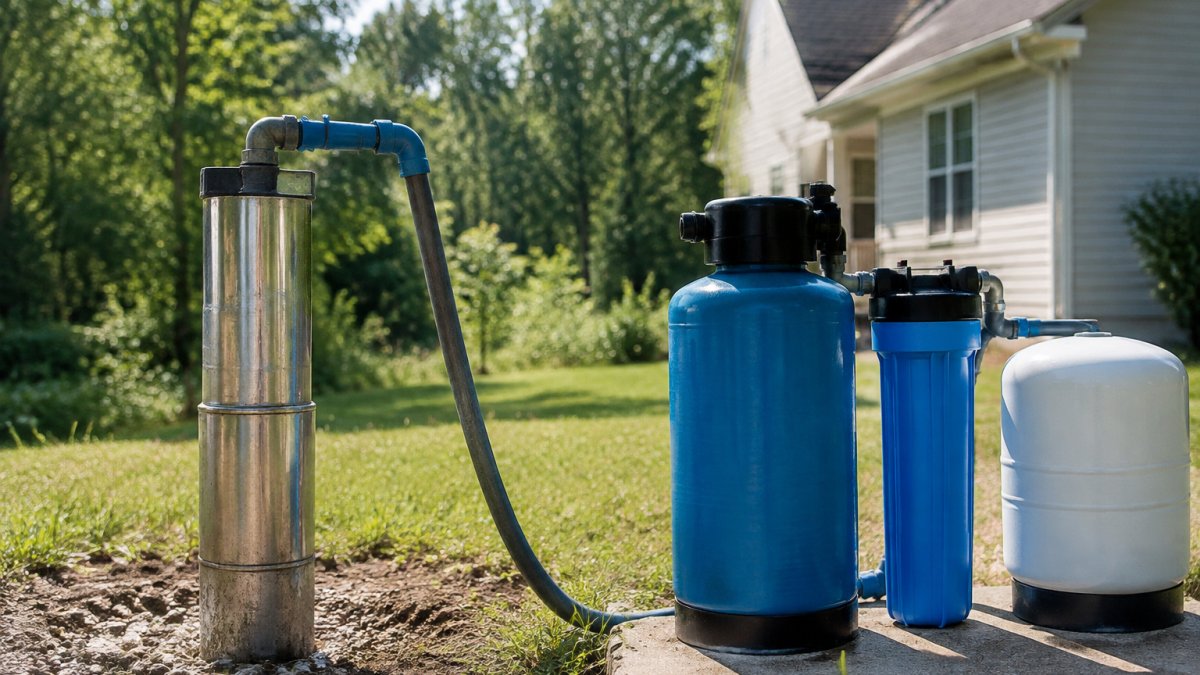
Whole-house treatment filters all the water entering your home. That means every tap, the shower, and the washing machine.
For lead specifically, whole-house systems make the most sense when lead is widespread in your plumbing or when you want protection at every fixture. They cost more and need professional sizing. If lead is only in your kitchen tap, a point-of-use filter may be enough. You can explore whole-home water filtration options to see how a system is sized for a house.
What it addresses: lead and other contaminants at every fixture, including bath and laundry.
What it misses: the service line itself; filtration treats water at the tap, not the pipe.
Upkeep: larger media beds and cartridges, professional service intervals, and higher upfront and ongoing cost.
Best fit: homes with lead throughout the plumbing, multiple young children, or a confirmed lead service line where line replacement is not immediate.
One question we hear often: does whole-house filtration also handle heavy metals like lead? It can, depending on the media used. Our guide on whether whole house filtration removes PFAS and heavy metals explains which media target which contaminants.
Trade-Offs at a Glance
Option | Lead Coverage | Maintenance Burden | Main Limitation | Suitability |
Certified pitcher | Drinking water only | Frequent cartridge changes | No cooking or bath coverage | Renters and single occupants |
Faucet-mounted filter | One tap, drinking and cooking | Moderate cartridge changes | Slows flow; one fixture only | Small households, easy install |
Under-sink filter | One tap, drinking and cooking | Moderate cartridge changes | One fixture only; basic plumbing | Most homes with kitchen-tap lead |
Whole-house system | Every fixture | Professional service intervals | Higher cost; does not replace the service line | Widespread lead or confirmed service line |
Reverse osmosis | Kitchen tap, broad contaminant reduction | Membrane and filter changes | Uses more water; strips minerals | Families wanting the highest tap reduction |
Watch out: a filter that is certified for lead reduction at one flow rate or capacity may not stay certified once it is past its cartridge life. The certification covers the product as maintained, not the housing you keep running for an extra year.
Choosing a Water Filter That Removes Lead for Drinking and Cooking
Match the filter to how you actually use water. That is the whole decision.
A water filter that removes lead must be certified for lead reduction, sized for your household, and maintained on schedule. Everything else is secondary.
Use this checklist before you buy:
The filter is certified specifically for lead reduction
Capacity matches your household size and daily water use
Replacement cartridges are easy to find and reasonably priced
The filter covers cooking water, not just drinking water
Installation fits your sink or cabinet setup
The maker publishes clear maintenance instructions
If you cook at home most nights, point-of-use treatment earns its cost quickly. If you have lead throughout the plumbing, whole-house treatment is the more sensible answer.
Why Lead Water Filter Certification Matters More Than Marketing Claims
Certification is the only independent proof a filter works. Marketing language is not.
Look for NSF/ANSI Standard 53 certification for lead reduction. That standard requires third-party testing that confirms the filter removes lead to a set level. A filter labeled "for cleaner water" or "improved taste" may not be certified for lead at all. The NSF guide to certified water filters lets you search certified products by contaminant.
What most shoppers miss: certification is product-specific, not brand-wide. One model from a manufacturer may be certified while another is not. Check the model number on the certification listing, not the logo on the box.
When a Reverse Osmosis System for Lead Removal Makes Sense
A reverse osmosis system for lead removal is the strongest point-of-use option. Reverse osmosis forces water through a membrane that blocks lead and many other dissolved contaminants.
It makes sense when:
You want the highest reduction at the kitchen tap
Your water also has other concerns, such as PFAS or high minerals
You have young children or a pregnant resident at home
The trade-offs are honest ones. RO systems use more water, take up cabinet space, and need membrane and filter changes. They also strip healthy minerals, which some homeowners address with a remineralizer. Our PFAS water treatment guide covers how RO fits into a broader treatment plan.
Matching the Filter to Your Symptoms and Your Home
Symptoms are clues, not proof. Treat them that way, and use them to decide what to test rather than what to buy.
Lead in water does not cause visible skin or hair symptoms the way hard-water minerals do. If you notice dry skin, dull hair, or soap that will not rinse, the cause is more likely calcium and magnesium buildup. That is a hardness problem, not a lead problem. Clear water and healthy skin do not prove the absence of lead, because lead has no taste, smell, or color.
A Symptom-to-Action Decision Guide
Use this map to move from what you notice to a proportionate next step. It is deliberately conservative: test before you treat, and treat only what the test confirms.
What You Notice | Most Likely Cause | Sensible Next Step |
Soap scum, white spotting on glassware, stiff laundry, dry or tight-feeling skin after showering | Hard water (calcium and magnesium) | Test water hardness with a strip or your utility report; consider a softener or shower filter only if hardness is confirmed |
Dull, brittle, or frizzy hair; tangles and split ends; flaky scalp | Mineral residue and product buildup, often compounded by hard water | Clarify less aggressively, check hardness, and rule out product buildup before buying a filter |
Redness, itching, acne-like bumps, or dermatitis that persists | Could be hardness irritation, a product reaction, or an unrelated skin condition | See a dermatologist if it persists; test hardness in parallel rather than self-treating with a filter |
Blue-green stains, corrosion at fixtures, metallic taste, or a home built before the late 1980s | Possible lead or corrosive water | Order a certified lab lead test; do not rely on a pitcher until results are back |
No visible symptoms at all, but a lead service line or older brass fixtures | Possible lead exposure with no warning signs | Test anyway; absence of symptoms is not evidence of safety |
How to Tell Hard Water Apart from Product Buildup and Weather
A practical at-home checklist helps separate the causes before you spend money:
Run the same routine in two locations. If the same shampoo and soap feel different at a hotel or a relative's house, your home's water is the likely variable.
Look at the fixtures, not just your skin. White scale on the showerhead, spotting on glasses, and soap that will not lather point to hardness rather than a skin condition.
Pause the suspect product. Stop a new cleanser, detergent, or styling product for two weeks. If symptoms fade, the product was the cause.
Check the season. Winter dryness and indoor heating cause flaking and tightness that mimic hard-water effects; symptoms that ease in humid months are less likely to be water-driven.
Read your utility's annual water quality report. It gives system-wide hardness and lead results, though it cannot tell you what your own plumbing adds.
Simple Ways to Test Water Hardness
Hardness is measured in grains per gallon (gpg) or milligrams per liter as calcium carbonate (mg/L CaCO3). Roughly, 1 gpg equals about 17.1 mg/L. Test strips give a quick ballpark; a certified lab test gives a defensible number. Use the reading to decide whether a softener or shower filter is worth the cost, not as a substitute for a lead test.
When lead and hardness are both present, treat them as two separate decisions. Lead treatment belongs at the drinking and cooking tap; hardness treatment is usually a whole-home or shower-level question. A professional test can help you tell whether you need lead treatment, hardness treatment, or both, rather than guessing.
Maintenance, Filter Changes, and What These Systems Will Not Fix
Maintenance is where most systems quietly fail. A filter past its change date stops protecting you.
Follow the maker's schedule, and mark it on a calendar. Most cartridges need changing every few months, while RO membranes last longer. Keep spare cartridges on hand so a change never gets postponed.
What these systems will not fix:
A lead service line. Filtration treats water at the tap, not the pipe. Replacing the line is a separate project.
Corrosive water. If your water eats pipes, treatment may need to address that cause too.
Every contaminant. A lead filter targets lead. It may not touch bacteria, PFAS, or hardness.
Watch out: skipping cartridge changes is the most common reason a working filter stops removing lead. The water still flows, so nothing seems wrong.
Lead in drinking water is a solvable problem, but only if you know what you are treating. Guessing at filters wastes money and leaves the risk in place. Bevilacqua Pure offers a free in-home water test, explains results in plain language, and recommends treatment based on your home's needs. Book Your Free Water Test to get a clear answer about the lead in your water.
Frequently Asked Questions
What type of water filter removes lead?
Several types work when they are certified for lead reduction: carbon block pitcher and faucet filters, under-sink carbon filters, and reverse osmosis systems. Certification matters more than the category. Check the product's listing against NSF/ANSI Standard 53 or 58 for lead reduction and confirm the specific model, not just the brand. A filter that improves taste is not automatically a lead filter, so read the certification line on the box or the performance data sheet before you buy.
Does reverse osmosis remove lead from drinking water?
Yes. Reverse osmosis membranes reject lead along with many other dissolved contaminants, and units certified to NSF/ANSI Standard 58 are tested for lead reduction. The trade-off is water use and cost: RO systems send some water to drain and need membrane and filter changes. They treat water at one tap, usually the kitchen sink, so they protect drinking and cooking water rather than every fixture in the house.
Should I test my water for lead before choosing a filter?
Testing first is the sensible order. Lead usually enters water from plumbing and solder rather than the source, so two homes on the same street can have very different results. A test tells you whether lead is present, at what level, and whether a certified filter is warranted at all. If your result comes back low, you may only need to flush taps before drinking. If it is elevated, you can size the filter to the actual number instead of guessing.
Can boiling water remove lead?
No. Boiling removes nothing but water vapor, so it actually concentrates lead and other non-volatile contaminants as the volume drops. The same applies to lead removal water filtration options that rely on evaporation. Use a certified filter, or flush the cold tap for a minute or two before use, and never use hot tap water for drinking, cooking, or mixing formula, since hot water dissolves more lead from pipes.
Comments