
Is Bottled Water Safer Than Filtered Tap Water?

Last Updated: November 5, 2026
Quick Summary
No, bottled water is not automatically safer than filtered tap water. Safety depends on the source water, how it was treated, and how the container was stored and handled, not on whether the water arrived in plastic. Federal rules require bottled water to meet the same safety standards as tap water.
Bottled water is regulated by the FDA, while municipal tap water is governed by the EPA and state agencies.
Purified bottled water often starts as municipal tap water that has been treated further.
A filter chosen for taste can leave lead or PFAS untouched, so confirm the reduction claim.
A filter left past its replacement interval can harbor bacteria and release trapped contaminants.
During a boil-water notice or storm, sealed bottled water is the safest immediate option.
Table of Contents
Bottled Water vs. Filtered Tap Water: The Short Answer
The short answer is no: bottled water is not automatically safer than filtered tap water. Safety depends on the source water, how it was treated, and how the container was stored and handled, not on whether the water arrived in plastic. This guide from Bevilacqua Pure explains where each option comes from, how both are regulated, and how to judge the water in your own home.
Federal rules require bottled water to meet the same safety standards as tap water, and a large share of bottled water starts as municipal supply anyway. That surprises most people. The label on the bottle rarely tells you the source, the treatment, or the test results behind it.
Below, we break down what the rules actually guarantee, which contaminants slip past treatment, and how to match a filter to your water. The comparison comes down to four things: source transparency, contaminant removal, maintenance, and cost per gallon.
Bottled Water vs. Filtered Tap Water: Regulation and Safety Standards
Both bottled water and municipal tap water fall under federal oversight, but through different agencies and different rulebooks. The U.S. Food and Drug Administration's bottled water regulations set quality standards for bottled products, while the Environmental Protection Agency's drinking water rules govern public water systems.
Bottled water is regulated as a food product (the FDA). It must meet standards for contaminants including bacteria, lead, and certain chemicals, and bottlers must follow good manufacturing practices. Municipal systems face a broader set of requirements: mandatory testing schedules, public reporting, and treatment standards for disinfection and specific contaminants.
Feature | Bottled Water | Filtered Tap Water |
Primary regulator | FDA | EPA and state agencies |
Testing frequency | Periodic, per bottler plan | Regular, mandated schedules |
Public reporting | Not required | Annual consumer confidence report |
Source disclosure | Varies by label | Source identified in report |
Treatment transparency | Limited | Documented in report |
Where Bottled Water Actually Comes From
Bottled water sources fall into a few categories: spring water drawn from an underground formation, purified water treated from a municipal or other source, mineral water with naturally occurring minerals, and artesian or well water. Purified water is often municipal tap water that has been treated further, sometimes by reverse osmosis or distillation.
That detail is worth knowing. When you buy purified bottled water, you may be paying a premium for water that started at a public system and went through additional filtration. It is not inherently cleaner than well-treated tap water.
How Municipal Tap Water Is Treated and Monitored
Municipal water typically goes through several stages. Coagulation and filtration remove particles and sediment. Disinfection with chlorine or chloramine controls germs and bacteria. Systems test regularly for contaminants and publish results in an annual water-quality report.
Monitoring practices vary by system, but treatment operators commonly track turbidity, disinfectant levels, and microbial indicators, and they adjust treatment as source water changes.
Is Tap Water Safe to Drink? What the Rules Guarantee and What They Don't
Tap water that meets federal and state standards is regulated for safety, but "meets standards" is not the same as "free of every contaminant." The rules set legal limits for specific contaminants and require treatment and monitoring. They do not eliminate every substance, and they do not account for what happens between the treatment plant and your kitchen faucet.
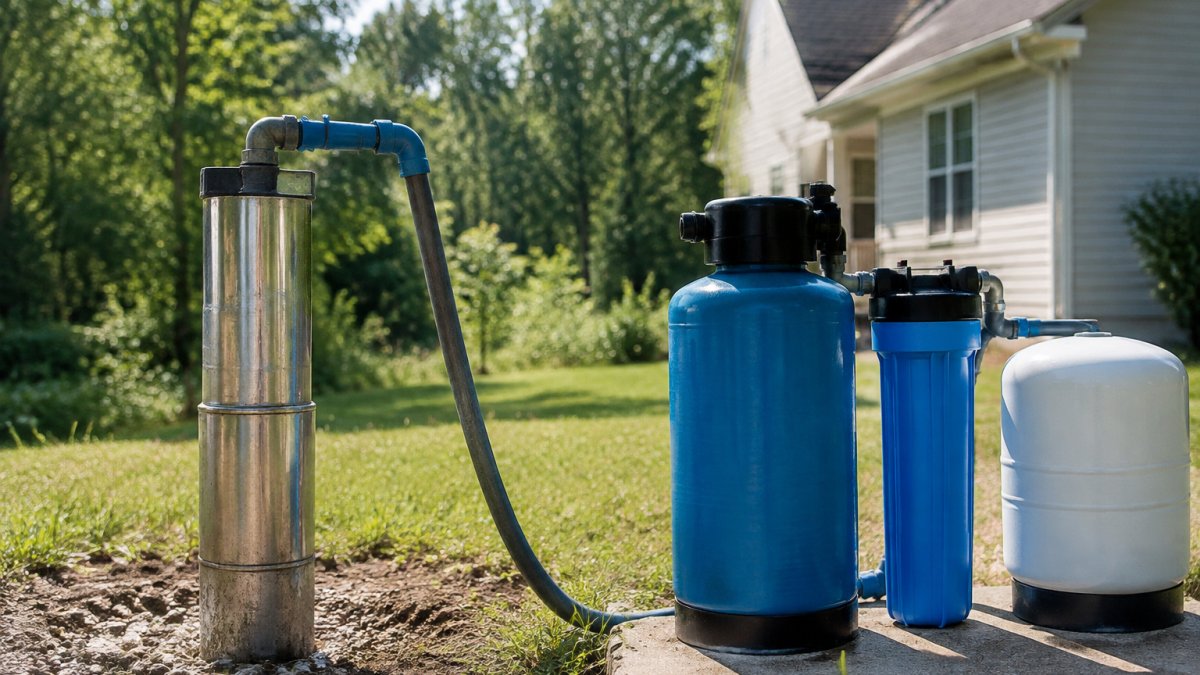
Older plumbing can leach lead into otherwise compliant water. Private wells fall outside federal rules entirely. And some contaminants of growing concern, including PFAS, are addressed through standards that continue to evolve. If your goal is cleaner drinking water, understanding these limits is the starting point.
Contaminants That Can Slip Through Treatment
Several categories of contaminants can remain in tap water even when a system is in compliance:
Lead from aging service lines and household plumbing
Disinfection byproducts formed when chlorine reacts with organic matter
PFAS, the persistent "forever chemicals" tied to industrial and firefighting foam use
Microplastics that enter source water and are not fully removed by conventional treatment
Sediment and mineral residue that affect taste and can build up in fixtures
For a step-by-step method to address forever chemicals specifically, see our guide on how to remove forever chemicals from tap water.
How to Test Tap Water and Read Your Water-Quality Report
Testing starts with your annual water-quality report, which your utility must publish and deliver to customers. Most people open it, see a wall of numbers, and close it again. Read it in a specific order and it becomes a practical decision tool rather than a compliance document.

Reading the Report in Four Steps
Find the source and treatment summary. The opening pages name the source water (river, lake, aquifer, or purchased supply) and describe the treatment train. If your water is purchased from another system, the report should say so.
Locate the detected-contaminant table. This is the core of the document. Each row lists a contaminant, the level detected, the range across the year, the legal limit (the MCL, or maximum contaminant level), and the likely source.
Compare the detected level to the limit, not to zero. A result below the limit is compliant, not absent. The gap between the detected level and the limit tells you how much headroom the system has.
Read the violations and health-effects language. If there were exceedances, the report must explain them and what was done. A clean report with no violations is a good sign, but it still only describes water leaving the treatment plant.
A common pattern is a report that shows lead well under the action level while a handful of individual homes still test high because of their own service lines. The report describes the system, not your kitchen faucet.
When the Report Is Not Enough
The report will not answer every question. Three situations call for testing at the tap:
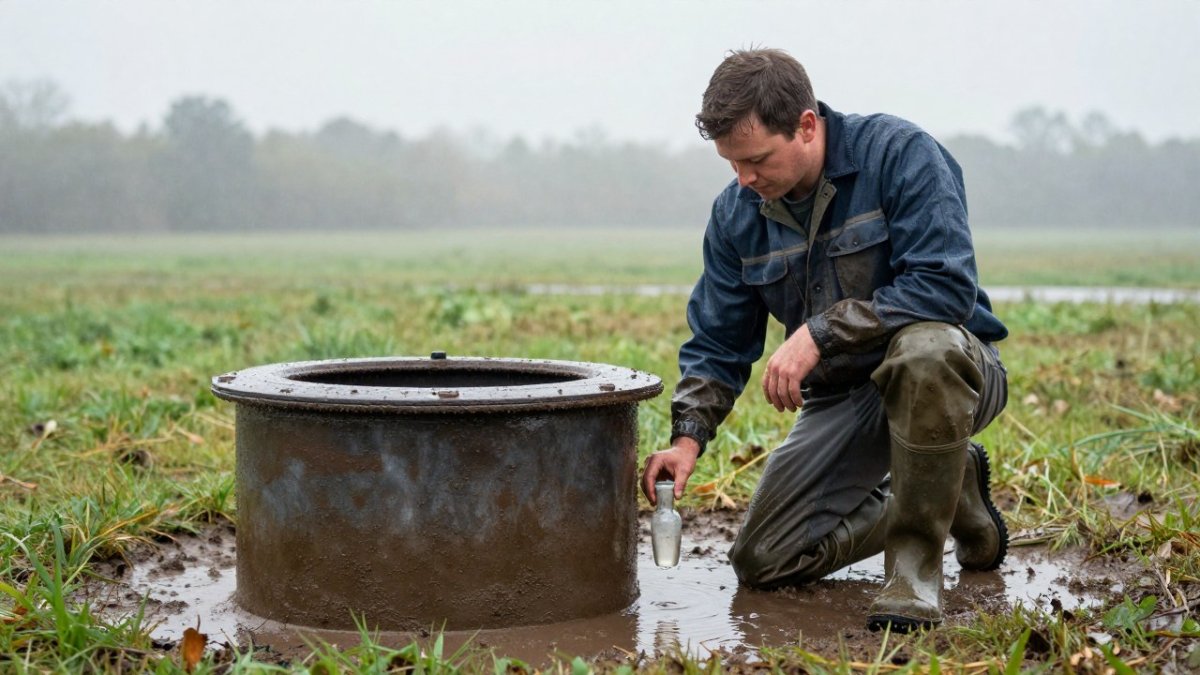
You have a private well. Federal rules do not cover private wells, so no report exists. Test at least annually for bacteria, nitrate, and anything specific to your area, and test for lead if plumbing is older.
Your home has older plumbing or a lead service line. Lead leaches between the plant and the tap, so a system-level result can look fine while your first-draw sample does not.
You notice a change. New taste, odor, cloudiness, or staining after plumbing work or a main break is a reason to sample rather than guess.
Use a certified lab, and sample the tap you actually drink from. For lead, collect a first-draw sample after the water has sat overnight, because that is when leaching shows up most clearly. For most other contaminants, a mid-morning sample after normal use is representative.
We offer free in-home water testing so you can see what is really in your water before deciding on any equipment.
What Water Filters Remove: Matching Filter Technology to Contaminants
Filter performance depends on matching the technology to the contaminant. No single filter removes everything, and a filter marketed for taste may do little for lead or PFAS. The useful question is not "which filter is best" but "which filter removes what is in my water."
Contaminant-by-Contaminant Guide
Chlorine and chloramine (taste and odor): carbon filters handle chlorine well. Chloramine is harder and needs a carbon block rated for it or a dedicated catalytic carbon stage.
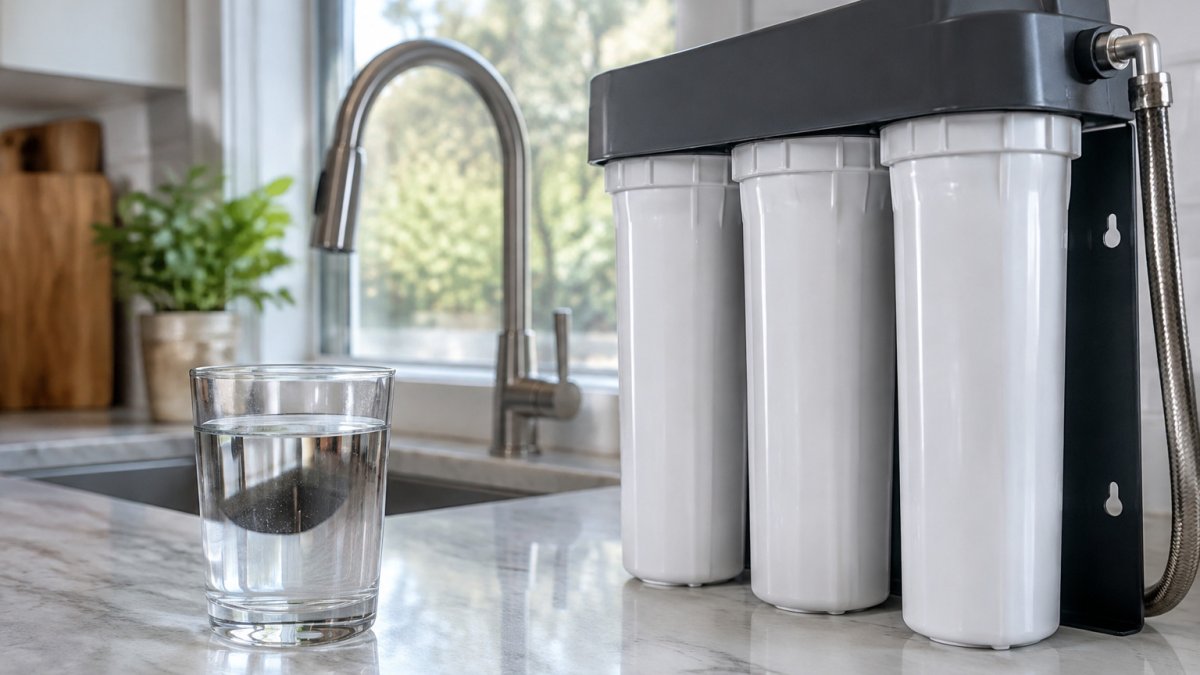
Lead: reverse osmosis removes it, and so do some carbon blocks and ion-exchange media with a certified lead-reduction claim. A basic pitcher filter may not.
PFAS: activated carbon with a certified PFAS reduction claim, ion exchange, and reverse osmosis are the technologies to look for. General "clean water" language is not a claim.
Disinfection byproducts: carbon filtration reduces many of them, which is one reason a carbon stage is common even when lead is the main concern.
Nitrate: reverse osmosis and ion exchange address it; carbon does not.
Sediment and mineral residue: sediment filters catch particles but not dissolved contaminants, so they are a pre-filter, not a solution.
Microplastics: fine carbon blocks and reverse osmosis membranes capture particles, but removal claims vary and should be checked rather than assumed.
Reading a Certification Claim
Third-party certification is the shortcut through marketing language. Look for a stated reduction claim against a named contaminant standard rather than a general promise, and check that the claim matches the model you are buying, a certification for one cartridge size does not automatically cover another. A filter that lists lead and PFAS reduction on its certification is telling you something specific; one that says "pure" is not.
Matching the Format to the Job
Whole-home systems treat water at every tap, which matters when the concern is a contaminant you also shower in or cook with. Under-sink and pitcher filters treat only drinking water, which is often enough when lead or taste is the issue. Reverse osmosis removes a broad range of contaminants but uses more water and typically needs a carbon pre-filter to protect the membrane.
For a deeper look at the options, our PFAS water treatment guide walks through how each technology performs. If you are weighing a whole-house system, our article on whether whole house filtration removes PFAS and heavy metals answers that directly.
Watch out: a filter chosen for taste can leave lead or PFAS untouched, so confirm the reduction claim against the specific contaminant you are trying to remove before you buy.
Water Filter Replacement Schedule and Maintenance Risks
Filters lose effectiveness as they load up with contaminants, and a spent filter can perform worse than no filter at all. Follow the manufacturer's replacement interval, and shorten it if your water has high sediment or mineral content.
Replace carbon and sediment cartridges on schedule
Track replacement dates on a calendar or reminder
Test water again after any change in taste or odor
Watch for reduced flow, a sign of a clogged filter
Service whole-home systems annually
Watch out: a filter left in place past its interval can harbor bacteria and release trapped contaminants back into the water. Our guidance on preventing mineral buildup and detecting forever chemicals covers how to stay ahead of both problems.
Cost Per Gallon, Convenience, and Plastic Waste
Cost per gallon is where the two options separate most. Bottled water carries the cost of the water, the bottle, the packaging, the transport, and the retail markup, and you pay it again with every case. A filter system carries an upfront cost plus periodic cartridge replacement, and the cost per gallon drops the longer you use it.
Convenience cuts both ways. Bottled water is portable and needs no maintenance, which is why it wins for travel and events. Filtered tap water is always available at the tap, with no cases to haul or store.
Plastic waste is the other trade-off. Single-use bottles generate a steady stream of plastic, much of which does not get recycled. A filter system typically produces less packaging waste over its life than single-use bottles.
Emergency Scenarios Where Bottled Water Still Wins
Bottled water remains the right choice in specific situations. During a boil-water notice, a main break, or a storm that disrupts supply, sealed bottled water is the safest immediate option. It is also the practical pick for travel, outdoor events, and anywhere you cannot verify water quality.
For everyday drinking at home, though, a filter gives you control over what you remove and how often you maintain it. The key is knowing your water first.
Book a Free Water Test Before You Buy Anything
The real question is not bottled versus tap in the abstract. It is what is in your water and what you want to remove. Before you spend money on cases of bottles or a filter system, find out what you are working with. Bevilacqua Pure offers free in-home water testing, plain-language explanations of your results, and a pressure-free consultation so you can decide with facts instead of guesswork. We design systems around your home's actual water, from targeted drinking-water filtration to whole-home protection. Book your free water test and get a clear picture of your water before you buy.
Frequently Asked Questions
Does bottled water contain PFAS?
It can. Bottled water is not automatically PFAS-free, and PFAS has been reported in some bottled products. Bottled water sold across state lines is regulated by the FDA, which has set some quality limits, but those limits do not cover every PFAS compound. If PFAS is your main concern, a certified filter that removes PFAS, such as a reverse osmosis system or a filter rated for PFAS reduction, gives you more control than a bottle label does.
Do water filters remove more contaminants than bottled water?
It depends on the filter and the contaminant, because you can match the filter to your actual water. A certified filter can target lead, chlorine, disinfection byproducts, and PFAS, and you can verify results with a test. Bottled water quality varies by brand and source, and the label rarely lists full test results. Filtered tap water also avoids the plastic bottle itself, which can shed microplastics into the water over time.
How often should I replace a home water filter?
Follow the manufacturer's water filter replacement schedule, which varies by product and is listed in the manufacturer's documentation. Hard water, high sediment, and heavy use shorten that interval. A clogged or expired filter can stop removing contaminants and may release what it captured, so mark the install date and replace on time.
How can I find out what is in my tap water?
Start with your utility's annual water-quality report, which lists detected contaminants and their levels. Then test at the tap, because the report reflects water leaving the treatment plant, not what comes out of your pipes. A free in-home water test can confirm chlorine, hardness, sediment, and other issues specific to your home before you choose a filter.
The choice between bottled water and filtered tap water comes down to transparency and control. Bottled water is not automatically safer, and a filter is only as good as its match to your contaminants. If you want cleaner, better-tasting water at every tap, Bevilacqua Pure can test your water, explain the results in plain language, and recommend a system built for your home. Get started with Bevilacqua Pure and take the guesswork out of your drinking water.
Comments