
How Old Plumbing Affects Your Drinking Water Quality

Last Updated: November 14, 2026
Quick Summary
Old plumbing can change drinking water quality by releasing lead, copper, iron, and other metals into water that sits in pipes. Water that stays in pipes for hours picks up more metal, and lead usually doesn't change how water looks, smells, or tastes. Testing and identifying your pipe materials are the best ways to find out what is in your water.
Water that sits in pipes for hours, such as overnight, tends to pick up more metal.
Lead and copper usually do not change how water looks, smells, or tastes.
Lead service lines are often dull gray, soft enough to scratch with a key, and not attracted to a magnet.
Collect a first-draw sample from a tap unused for at least six hours to test for plumbing lead.
Use only cold water for drinking and cooking, and look for filters certified to NSF/ANSI Standard 53.
Is old plumbing affecting your water?
Bevilacqua Pure offers free in-home water testing and plain-language results for Worcester County homes.
Table of Contents
Why Old Plumbing Changes What Comes Out of Your Tap
Old plumbing can change the quality of your drinking water, even when the water leaving your local treatment plant is safe. The reason is simple: water picks up metals and minerals from the pipes it travels through before it reaches your glass. In older homes, that path often includes lead, copper, galvanized steel, or iron. The answer starts with understanding what is inside your walls.
Water that sits in pipes for hours, such as overnight or during a long workday, tends to pick up more metal than water that is moving. A common mistake is assuming that a clear, odorless glass of water is automatically safe. Lead and copper usually do not change how water looks, smells, or tastes, so a visual check alone cannot tell you what is in it.
The good news is that you can learn what your plumbing is made of and take simple steps to reduce your exposure. The sections below walk through the common pipe types, the signs that point to problem materials, and how to test and filter your water.
Types of Plumbing Materials and Their Risks
Several pipe materials are common in homes built before the 1990s, and each carries different risks:
Lead pipes and lead service lines: Once widely used for water mains and home connections. Lead is the most serious concern for drinking water.
Galvanized steel: Steel coated with zinc. Over time the coating wears away, and the pipe can corrode, rust, and release iron into the water.
Copper: Common in plumbing since the mid-1900s. Copper is generally safer than lead, but it can leach into water that is acidic or sits for long periods.
Solder and brass fittings: Older solder often contained lead, and some brass fixtures contain small amounts of lead.
Knowing which material your home has is the first step toward knowing your risk.
Lead Pipes and Lead Service Lines
A lead service line is the pipe that runs from the water main under the street to your home. Lead pipes inside the house can also leach metal into your water. Lead is dangerous even at low levels, and children and pregnant women face the greatest risk. The U.S. Environmental Protection Agency (EPA) regulates lead in drinking water and provides guidance for homeowners on how to identify and address lead pipes (the EPA).
Lead pipes are often dull gray, soft enough to scratch with a key, and do not attract a magnet. Check with your local water utility to find out whether your service line is known to contain lead.
Galvanized Steel, Copper, and Solder
Galvanized pipes are often found in homes built between the 1920s and 1960s. Once the zinc coating is gone, the steel corrodes from the inside, which can cause rust-colored water, reduced water pressure, and buildup of sediment. Galvanized pipes also tend to release more metal into water over time.
Copper pipes are lighter and resist corrosion well, but water with low pH can dissolve copper into the water supply. Older solder used in copper joints was often made with lead, which can be a concern in homes built before the lead solder ban of 1986.
Signs of Lead Pipes in a Home
Many homeowners want to know whether their pipes are lead before spending money on testing. The checks below can give you clues, but none of them provides proof. Treat them as a way to decide what to inspect and test first, not as a verdict on your water.

Step 1: Identify the pipe materials you can see
Start where the water enters the house. The pipe coming through the foundation or basement wall is usually the service line, and it is often the most revealing pipe in the home.
Lead service line: Dull gray, soft enough to scratch with a key, and not attracted to a magnet. A scratch often reveals a shiny, bright surface underneath. Lead bends more easily than steel and does not sound hollow when tapped.
Galvanized steel: Gray and often rough or rust-flecked. A magnet sticks firmly. Threaded joints and a heavier feel are common.
Copper: Reddish-brown or greenish where it has oxidized. A magnet does not stick. Soldered joints are typical.
Plastic (PEX, CPVC, or PVC): Usually white, blue, or red. A magnet does not stick, and the pipe is noticeably lighter.
If the visible service line is plastic but the interior pipes are old, the utility or a previous owner may have replaced only the outside portion. That partial replacement matters because the interior run can still contribute lead.
Step 2: Locate the service line and check utility records
The service line runs from the water main under the street to your home, and the portion on your property is usually the homeowner's responsibility. Call your water utility and ask two questions: what material is recorded for your service line, and whether the utility has a lead service line replacement program. Many utilities publish service line inventories or maps, and some will confirm the material on request. Records can be incomplete, so compare what the utility says with what you can see at the entry point.
Step 3: Inspect the fixtures and joints
Lead can come from places other than the main pipe. Look at the solder on copper joints, the faucet body, and any brass valves or fittings. Older solder often contained lead, and some brass fixtures contain small amounts of lead that can leach into standing water. Faucets and fixtures sold today are subject to lead-content limits under the Safe Drinking Water Act, but older fixtures predate those limits.
Step 4: Decide what to test first
If you find a lead service line, lead solder, or an older brass fixture, test the water before replacing anything. A first-draw sample from a kitchen or bathroom tap that has sat overnight is the most useful starting point for finding lead from plumbing. If the service line is lead, ask the utility or a certified lab whether a sample after flushing is also worth collecting to separate the service line from interior pipes.
Watch out: A scratch or magnet test can mislead you. Galvanized pipe that has lost its zinc coating can look dull gray, and lead pipe can be painted or coated. Do not skip testing because a visual check looked reassuring.
What the clues do not tell you
Age alone cannot confirm pipe composition. A home built before 1930 is more likely to have lead pipes, and a home built before 1986 is more likely to have lead solder, but plumbing is often replaced or added over decades. Visual signs and records narrow the possibilities; a certified laboratory test is the only reliable way to know what is in your water.
How Corrosion, Rust, and Sediment Reach Your Glass
Corrosion happens when water chemically reacts with the metal inside pipes. Water with low pH, high dissolved oxygen, or high temperatures tends to speed up corrosion. Over time, this breaks down the pipe wall and releases metal ions into the water.
Rust-colored water is a sign that iron from galvanized pipes or iron mains is entering your supply. Sediment, which looks like fine grit or particles, can come from pipe scale or mineral buildup. You may notice these problems most after a water main repair or when the water has been sitting in the pipes for a while. Running the cold tap for a few minutes can help clear out the water that has been sitting, though it does not remove lead or other dissolved metals.
Visible discoloration is a helpful warning sign, but many harmful metals do not change the color, taste, or smell of water.
Health Risks Linked to Contaminated Drinking Water
Metals from old plumbing can affect health in different ways depending on the metal and how much a person is exposed to over time:
Lead: Exposure can affect brain development in children and raise blood pressure in adults. There is no known safe level of lead in the blood.
Copper: High levels can cause stomach upset, nausea, and vomiting in the short term.
Iron: Mainly causes staining and an unpleasant taste, though it is not usually a serious health concern at typical levels.
Bacteria: Stagnant water in old or poorly maintained plumbing can allow bacteria to grow.
The Centers for Disease Control and Prevention (CDC) explains the health effects of lead and offers guidance on protecting children (the CDC). If you have concerns about symptoms, talk with a doctor.
Drinking Water Testing for Lead: First-Draw vs. Flushed Samples
Lead testing results depend heavily on how the sample is collected. The two most common methods are:
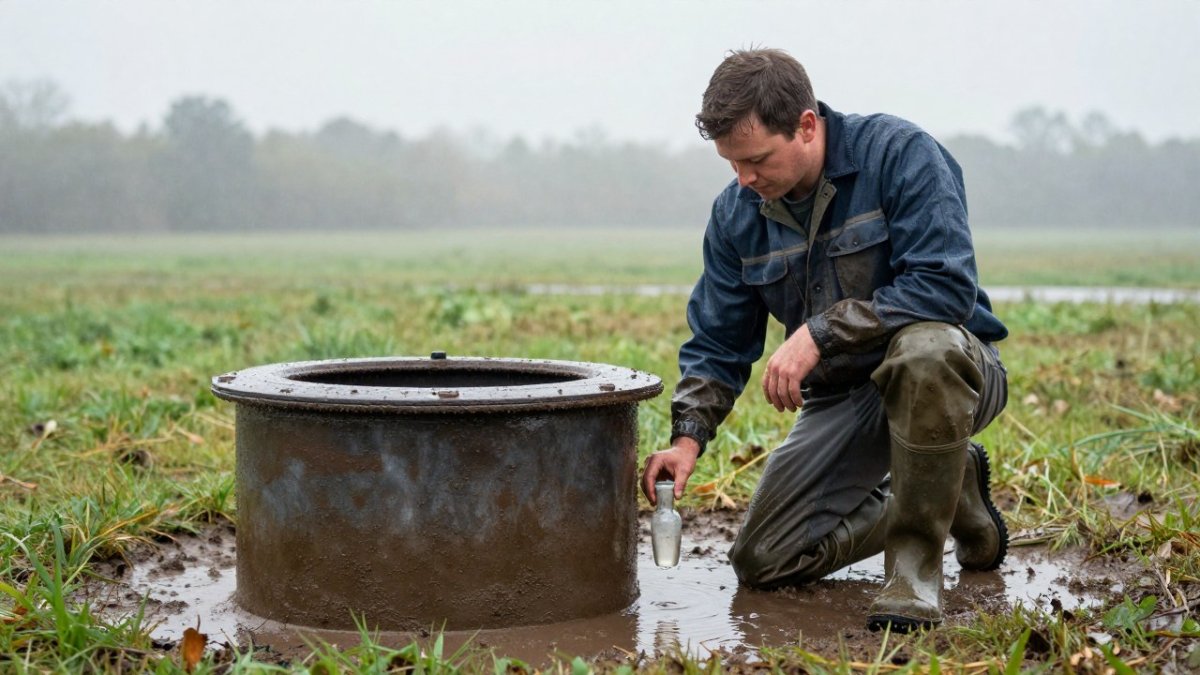
First-draw sample: Collected from a tap that has not been used for at least six hours. This shows the water that has been sitting in your pipes and is the most useful method for finding lead from plumbing.
Flushed sample: Collected after running the tap for several minutes. This shows the water coming from the main supply rather than the pipes inside your home.
Testing both can help you understand whether the problem is in your home's plumbing or in the water supply. Ask a certified lab which sampling method it recommends for your situation, and follow its collection instructions exactly so the results are accurate. A PFAS water treatment guide covers testing steps and home filter options for contaminants.
Why stagnation time and sampling method matter
Lead does not usually dissolve evenly into water. It leaches from pipe walls, solder, and brass fittings, and the amount in a sample depends on how long the water sat in contact with those surfaces. A sample collected after six hours of stagnation is designed to capture the worst-case contribution from your plumbing. A sample collected after flushing is designed to capture what the utility delivered. Neither sample answers every question, and a single result should not be read as a clean bill of health for the whole house.
Sampling instructions from the laboratory are not interchangeable. Some protocols call for a specific bottle, a specific flow rate, and a specific stagnation period. Changing any of those steps can make results hard to compare with action levels or with a utility's own testing.
How to read a lead result against action levels
The EPA's Lead and Copper Rule sets an action level for lead in drinking water (the EPA). The action level is not a health-based maximum; it is a regulatory trigger that requires water systems to take additional steps when too many samples exceed it. Check the current EPA guidance for the exact figure. For an individual household, any detectable lead is worth discussing with your utility or health department, especially if children or pregnant women live in the home.
When your report arrives, check three things:
The unit: Results may be reported in mg/L, micrograms per liter (µg/L), or parts per billion (ppb). One mg/L equals 1,000 µg/L, and 1 µg/L equals 1 ppb. Convert before comparing.
The sampling method: Confirm whether the lab analyzed a first-draw or flushed sample, and compare like with like.
The detection limit: A result reported as "not detected" means below the lab's detection limit, not necessarily zero.
Compare taps to narrow down the source
If you want to distinguish plumbing contamination from a source-water problem, collect samples from more than one location and compare them. A common pattern is a higher first-draw result at an older interior tap and a lower flushed result at the same tap, which points toward the home's plumbing. A flushed sample that is still elevated across multiple taps points toward the service line or the utility supply. Compare your results with your utility's most recent Consumer Confidence Report, which lists detected contaminants and their levels for the system as a whole.
Watch out: Do not collect a first-draw sample from a tap that was used earlier in the day, and do not collect a flushed sample without following the lab's flushing time. A sample collected the wrong way can understate or overstate your exposure and lead to the wrong next step.
When to contact your utility or health authority
Contact your water utility if a first-draw sample shows lead at or above the action level, if the utility confirms a lead service line, or if you are unsure how to interpret a result. Contact your state or local health department if you have questions about health effects, if children or pregnant women are in the home, or if you need help finding a certified laboratory. A certified lab, not a home test strip, should be used for any result you plan to act on.
The table below sums up the two main lead sampling methods and what each one tells you.
Sample type | When to collect | What it shows |
First-draw | Tap unused for at least six hours | Lead leaching from your home's plumbing |
Flushed | After running the tap for several minutes | Water coming from the main supply |
Compare both | Collect both types from the same tap | Whether the problem is in your home or the supply |
How to Reduce Lead in Drinking Water Right Now
While you plan longer-term fixes, these steps can lower your exposure:
Run the cold tap first: After water has sat overnight, run the cold tap until it feels noticeably colder, then use that water for drinking and cooking.
Use only cold water for drinking and cooking: Hot water pulls more metal from pipes and fixtures.
Clean the faucet aerator: Lead particles can collect in the screen at the tip of the faucet. Remove and rinse it regularly.
Use a filter certified for lead: Look for filters certified to NSF/ANSI Standard 53 for lead reduction.
Check with your utility: Ask whether your area has a lead service line replacement program.
These steps reduce exposure but do not replace permanent pipe replacement or a proper filtration system.
Water Filtration for Old Homes: What Actually Works
Not every filter removes metals from water. Pitcher filters and faucet-mounted units are often certified only for chlorine or taste, not lead. For old homes, the most effective options include:
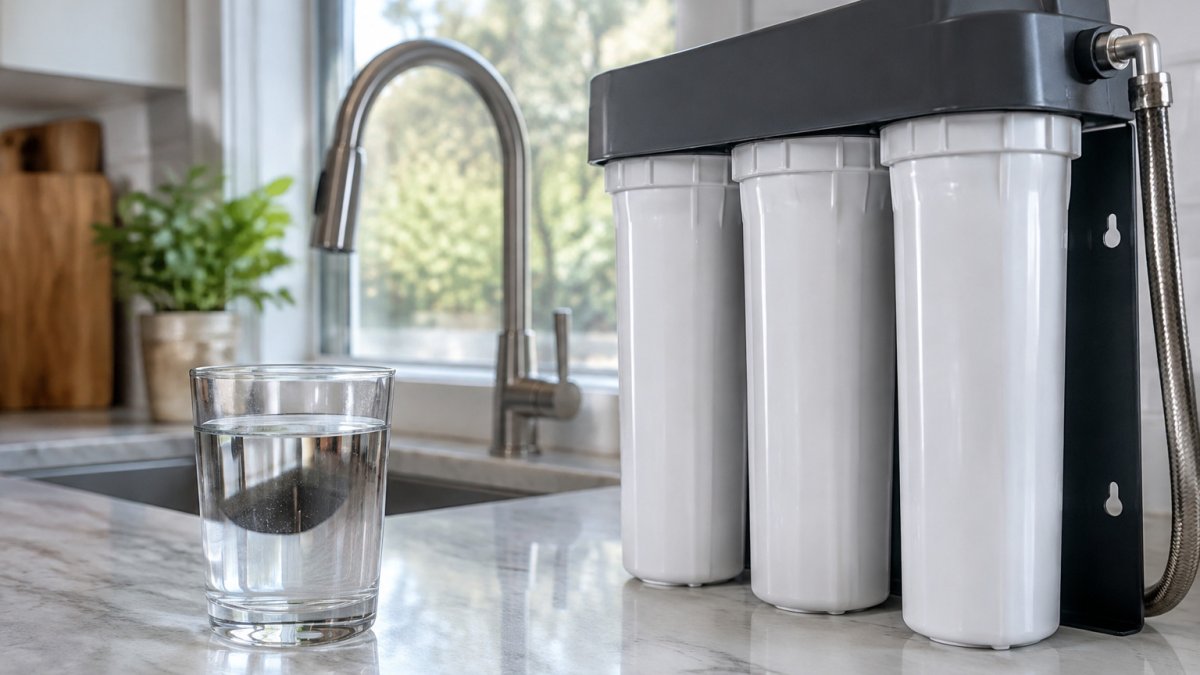
Under-sink reverse osmosis systems: Remove lead, copper, and many other dissolved metals at the point of use. They are a practical choice for drinking and cooking water.
Whole-home filtration: Treats all the water entering the house. This can address sediment, rust, and metals throughout the home, though it is a larger investment.
Activated carbon filters: Good for chlorine and taste but may not remove lead unless specifically certified for it.
Always check that a filter is certified for the specific contaminant you are concerned about. Bevilacqua Pure can help you compare whole-home filtration and reverse osmosis options based on your water test results and household needs. Pricing depends on the system type, your home's size, and installation requirements, so contact us for a quote.
Booking Your Free In-Home Water Test
The fastest way to understand what is in your water is to test it. Bevilacqua Pure offers a free in-home water test. We explain your results in plain language, with no pressure to buy anything. Our consultation process is designed so you can make a decision that fits your home and budget.
If your results show lead or other concerns, we will walk you through the options and outline what each would involve. If your water tests clean, you will know that too. Visit our website to schedule your free test and get clear answers about your drinking water.
Frequently Asked Questions
Is it safe to drink tap water from old pipes?
It depends on the pipe material and the water chemistry. Old pipes made of lead, galvanized steel, or with lead solder can release metals into water, especially water that has sat overnight. Running the tap until it turns noticeably colder, or flushing for a few minutes, reduces exposure from stagnant water. The only way to know what your water contains is to have it tested by a certified laboratory, and a first-draw sample is the best starting point for checking plumbing-related contamination.
What is the healthiest pipe for drinking water?
Copper and PEX (cross-linked polyethylene) are the most commonly used options for household drinking-water lines today, and neither contains lead. Copper can still leach small amounts of metal in some water conditions, so water chemistry matters. Avoid replacing one pipe with another without checking the solder and fittings, because lead-based solder was common in copper plumbing installed before the 1986 federal ban on lead solder in drinking-water systems.
Can old plumbing make you sick?
Old plumbing can contribute to health problems mainly through lead exposure, which is especially harmful to infants, young children, and pregnant people. Lead affects brain development and can cause long-term effects even at low levels. Bacteria can also grow in pipes with biofilm or stagnant water. If someone in your household shows symptoms or you are concerned about exposure, contact your doctor and ask about a blood lead test, and have your water tested.
How can I tell if my home's plumbing is affecting my drinking water?
Look for discolored or cloudy water, a metallic taste, rust-colored sediment, or stains on fixtures, but understand that these signs alone cannot confirm contamination. Many harmful metals are colorless and tasteless. Check your home's plumbing materials, look for lead service lines near the water main, and check whether your home was built before 1986. A certified laboratory test of first-draw and flushed samples gives you the clearest answer about what is in your water.
Comments