
Cost of Professional Water Filtration Installation

Table of Contents
Last Updated: September 18, 2026
What Drives the Cost of Professional Water Filtration Installation
The cost of professional water filtration installation comes down to two variables: the equipment you choose and the conditions inside your home. Most homeowners assume the filter itself is the biggest expense. In practice, labor and site conditions often account for a larger share of the final quote than the hardware.
This guide from Bevilacqua Pure breaks down where your money actually goes, why two neighbors on the same street can receive quotes that differ by thousands of dollars, and how to read a water quality report before you commit to anything.
Here's the part most pricing guides skip: your water chemistry determines which system you need, and your plumbing determines how much it costs to install it. Get those two things right and the number stops feeling arbitrary.

Equipment Costs vs. Labor Rates
Equipment costs cover the filter housings, media tanks, membranes, control valves, and cartridges. Labor rates cover the licensed plumber or installer's time, plus any permits and disposal fees.
A common mistake is comparing a big-box store sticker price to a full installation quote. Those aren't the same product. Retail systems are designed for DIY mounting at a single tap. Professionally installed systems tie into your main water line, which requires cutting pipe, soldering or pressing fittings, and testing for leaks under pressure.
Labor rates vary by region and by the complexity of the tie-in. A straightforward connection to an accessible main line takes far less time than retrofitting a system into a finished basement with no shut-off valve nearby.
Site Conditions and Plumbing Infrastructure
Site conditions are the wild card in every quote. An accessible main water line with a nearby power outlet and a floor drain makes for a quick install. A finished basement, a crawl space entry, or a home with polybutylene or galvanized piping changes the scope entirely.
What most guides miss is that plumbers aren't just installing a filter. They're often correcting problems the filter will expose. High water pressure can damage a new system, so a pressure-reducing valve may need to be added. Missing shut-off valves have to be installed so the system can be serviced without cutting water to the whole house.
Each of those corrections adds time, parts, and cost. Ask any installer to itemize these separately, and you'll see exactly where your quote is going.
Pro Tip Before you get a quote, locate your main shut-off valve and check whether there's a grounded outlet within a few feet of your main water line. Installers who don't have to run power or add a valve can often complete the job faster, which shows up in the labor line.
Types of Water Filtration Systems and Their Price Ranges
The type of system you choose sets the floor for your total expenditure. Whole-house filtration, point-of-use systems, reverse osmosis, and water softeners each solve different problems, and each carries a different installation complexity.
System Type | What It Treats | Installation Complexity | Best For |
Whole-house carbon filtration | Chlorine, chloramine, taste, odor | Moderate to high | Homes wanting treated water at every tap |
Point-of-use carbon block | Taste, odor, sediment at one tap | Low | Renters or single-tap needs |
Reverse osmosis | Dissolved solids, PFAS, heavy metals | Moderate | Drinking and cooking water |
Water softener | Hard water minerals, scale | Moderate | Homes with mineral buildup |
Whole-House Filtration vs. Point-of-Use Systems
Whole-house filtration treats water where it enters the home, so every tap, shower, and appliance receives filtered water. Point-of-use systems treat water at a single fixture, usually the kitchen sink.
The trade-off is scope versus cost. A point-of-use system is cheaper to buy and install because it connects to one supply line under a cabinet. A whole-house system requires tying into the main water line, which is where labor and site conditions start to matter.
For homeowners dealing with chlorine smell in the shower or scale on the water heater, point-of-use won't solve the problem. It only treats what flows through that one fixture.
Reverse Osmosis and Water Softener Installation
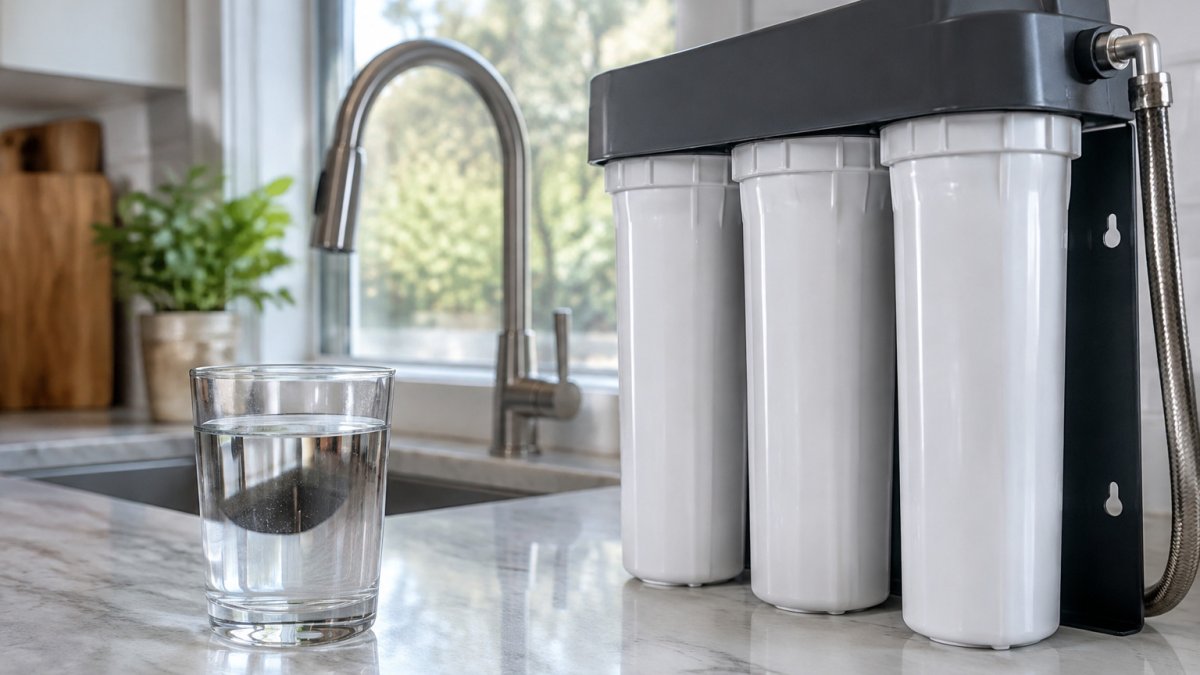
Reverse osmosis pushes water through a semi-permeable membrane that captures dissolved solids and many contaminants. These systems are typically installed under the kitchen sink with a dedicated storage tank and faucet, or as a larger unit feeding multiple points.
Water softeners work differently. They use ion exchange to remove the calcium and magnesium that cause hard water. Installation involves a brine tank, a resin tank, and a drain line, plus a bypass valve so you can still use water during maintenance.
Both systems need a drain connection and a power source. If your installation site lacks either, expect the quote to reflect the extra work.
Average Cost of Water Filtration Installation: A Pricing Breakdown
There's no single average that applies to every home, and any guide that hands you one number is oversimplifying. What you can do is understand the components that make up your quote so you can compare apples to apples, and know which line items are negotiable versus fixed.
A professional installation quote typically includes:
Equipment: filter housings, media, membranes, control heads, and cartridges
Labor: installation time at the local plumber's hourly rate
Materials: pipe, fittings, valves, and mounting hardware
Permits: required in some jurisdictions for plumbing modifications
Testing: pre- and post-installation water testing to confirm performance
How Each Line Item Actually Moves the Total
Most homeowners fixate on the equipment line because it's the easiest to compare. In practice, the equipment line is the least variable part of the quote. Two installers quoting the same whole-house carbon system will land within a narrow band on hardware. The spread between quotes almost always lives in labor, materials, and site corrections.
Equipment. This is the filter housings, media tanks, control valves, membranes, and cartridges. It scales with system capacity (how many gallons per minute the unit must treat) and with the contaminants it's built to remove. A sediment-and-carbon whole-house unit and a PFAS-rated unit with a larger carbon bed are not the same product, even if both mount on the same wall.
Labor. Billed at the installer's hourly rate, but the hours are what vary. A clean tie-in to an accessible main line with a nearby shut-off valve and a grounded outlet is a short job. The same system retrofitted into a finished basement, behind drywall, with no shut-off valve, is a long one. Ask for the estimated hours in writing, not just the hourly rate.
Materials. Pipe, fittings, valves, mounting hardware, and adapters. This line is small on a modern PEX or copper system and grows quickly when the installer has to adapt to older or non-standard piping. Adapters, dielectric unions, and replacement sections of pipe all show up here.
Permits. Some jurisdictions require a plumbing permit for modifications to the main water line or for adding a drain connection. The fee itself is usually modest; the inspection scheduling is what adds time to the project.
Testing. Pre- and post-installation water testing confirms the system is doing what it was specified to do. This is the line item that protects you, it's the difference between 'the filter is installed' and 'the filter is working.'
Why Two Neighbors Get Different Quotes
Same street, same municipal water, different quotes. The reasons are almost always physical, not commercial:
Pipe material and condition. A home with clean copper or PEX is a straightforward tie-in. A home with galvanized steel that has mineral buildup inside the pipe may need a section replaced before the new system can maintain flow rate.
Access. A main line in an open utility room is fast. A main line behind a finished ceiling or in a crawl space is slow.
Electrical. Systems with control valves, UV stages, or booster pumps need a grounded outlet within reach. If one isn't there, an electrician gets added to the job.
Drainage. Reverse osmosis and water softeners need a drain connection. If the nearest drain is across the room, the drain line run adds labor and materials.
Pressure. High incoming water pressure can damage a new system. A pressure-reducing valve may need to be added before the filter is installed.
Each of those is a real, itemizable cost. A quote that lumps them into a single 'installation' number is harder to compare, and harder to challenge if the scope changes mid-job.
How to Read a Quote Like a Buyer
Ask for the quote broken into the five lines above. Then ask two follow-up questions:
What's included in labor? Travel, setup, testing, and cleanup should be stated. If they aren't, assume they're in there and ask anyway.
What's excluded? Permits, electrical work, drain runs, and pipe replacement are the usual exclusions. Knowing them upfront prevents the 'surprise' line on the final invoice.
Bevilacqua Pure provides free in-home water testing and a plain-language explanation of your results before recommending any system.
Watch Out Be skeptical of any quote given over the phone without a water test. A system sized for the wrong water chemistry either underperforms or fails early, and you've paid full price for both. The same warning applies to a quote that doesn't itemize labor and materials separately, you can't compare what you can't see.
PFAS Water Treatment Cost: What You Need to Know
PFAS water treatment cost is one of the fastest-growing questions homeowners ask, and for good reason. PFAS, or per- and polyfluoroalkyl substances, are a group of manufactured chemicals that persist in the environment and have been linked to health concerns at certain exposure levels (the EPA).
Water Filtration System Maintenance Requirements and Ongoing Costs
Water filtration system maintenance requirements vary by technology, but every system has consumables that need replacing on a schedule. Ignoring them is the most common way homeowners end up with a filter that's doing nothing.
Here's what maintenance looks like across common system types:
Sediment filters: replaced every few months depending on sediment load
Carbon block cartridges: replaced every 6 to 12 months
Reverse osmosis membranes: replaced every 2 to 3 years
Water softener resin: lasts many years, but salt needs regular refilling
Whole-house media tanks: media replaced every several years
Key Takeaway The purchase price is only part of what you'll spend. Ask for the yearly filter and media cost before you decide, and compare systems on total cost over five years, not sticker price.
How Water Testing and Water Quality Reports Affect Your Quote
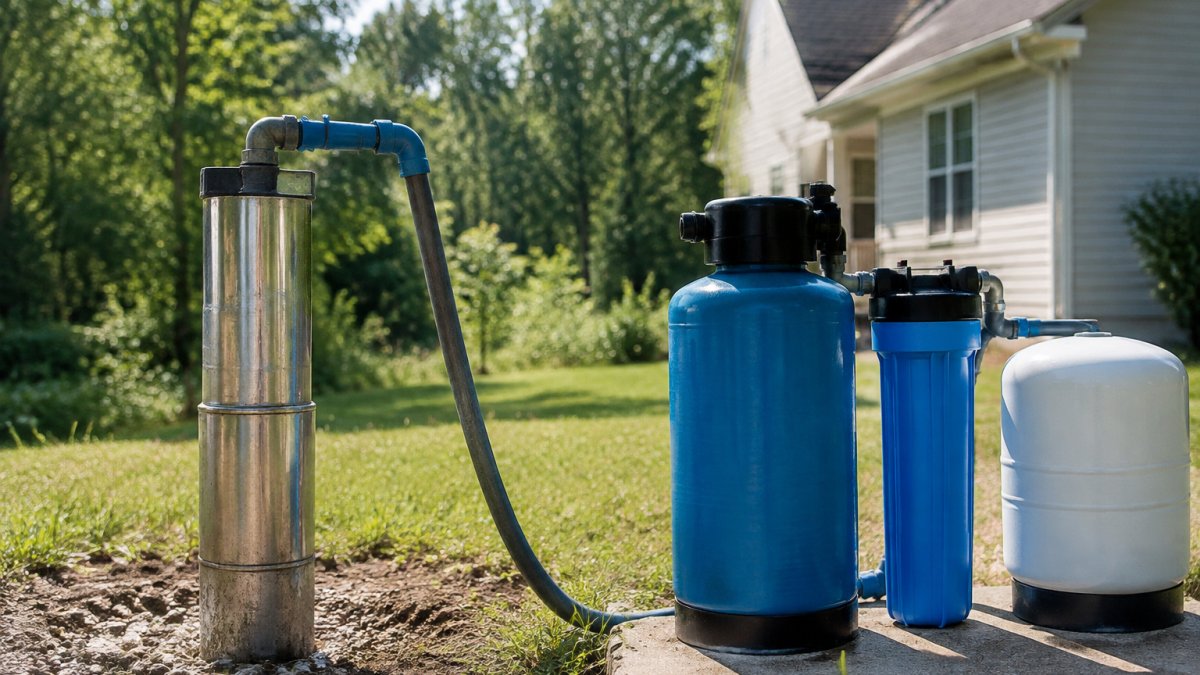
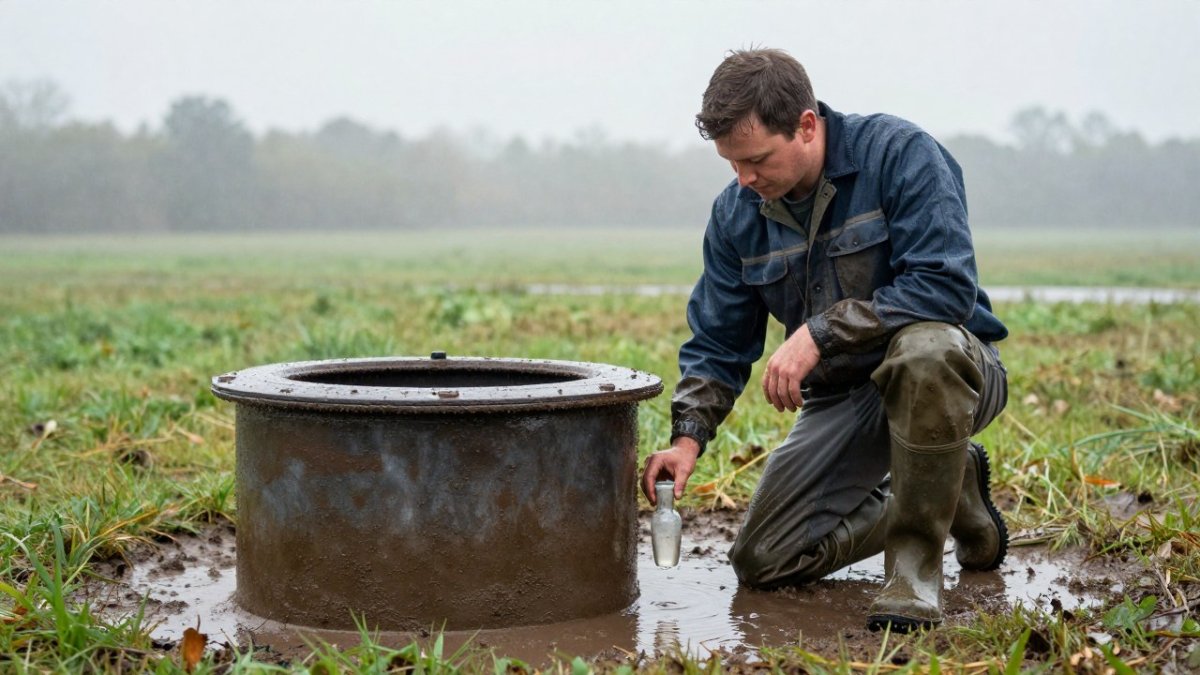
Water testing is the step that turns a generic quote into an accurate one. Two homes on the same street can have different water chemistry depending on pipe material, well depth, or how far they sit from the treatment plant.
Labor Costs vs. Equipment Costs: Where Your Money Goes
Labor typically represents a substantial share of a professional installation, and it's the line item homeowners scrutinize least. That's backwards. Equipment is a known quantity you can shop around. Labor reflects the actual work required in your home.
Where labor costs climb:
Difficult access: crawl spaces, finished walls, or tight utility rooms
Pipe retrofitting: adapting the system to older or non-standard piping
Electrical work: adding a grounded outlet for systems that need power
Drain connections: routing discharge lines for RO and softener systems
Permits and inspections: required in some areas for plumbing changes
Compatibility with Existing Plumbing and Pipe Retrofitting
Compatibility with your existing plumbing determines how much retrofitting the job requires, and retrofitting is where surprise costs live. A system designed for modern PEX or copper lines may need adapters to connect to older materials.
Pro Tip Take a photo of your main water line, shut-off valve, and the area around them before your consultation. An installer can often flag compatibility issues from a photo and give you a more accurate estimate before setting foot in your basement.
Signs You Need a Water Filtration System
Not every home needs a whole-house system, and an honest assessment should tell you when one isn't necessary. That said, there are clear signals that your water is worth testing.
Watch for these signs:
Mineral buildup on faucets, showerheads, and glassware
Staining in sinks, tubs, or laundry from iron or manganese
Chlorine smell or taste in municipal water
Cloudiness or sediment visible in a glass of tap water
Recurring appliance issues with water heaters, dishwashers, or washing machines
Family members reporting dry skin, dull hair, or unpleasant taste
Long-Term ROI and Operational Costs of Water Filtration
Most guides stop at the install price. That's the wrong number to optimize. The number that matters is total cost of ownership over five to ten years, equipment, consumables, service, and the downstream savings that don't show up on any quote.
The Five-Year Total Cost of Ownership Model
A useful TCO model has four buckets. Add them up over five years and compare systems on that number, not on sticker price.
Consumable Costs Scale With Water Chemistry, Not Just System Type
This is the mechanism most guides miss. Filter life isn't a fixed calendar, it's a function of how much contaminant load the media has to absorb.
Sediment filters in a home with high sediment (common on private wells) may need replacement every few months. The same filter on clean municipal water can last considerably longer.
Carbon cartridges are rated in gallons, but real-world life shortens with higher chlorine or chloramine levels. A utility that uses chloramine instead of chlorine can exhaust carbon faster.
Reverse osmosis membranes last longer when pre-filters are changed on schedule. Skip the pre-filter and the membrane, the expensive part, fails early.
Water softener resin lasts many years, but salt consumption scales with water hardness. A very hard water supply means more salt, more often.
Whole-house media tanks are replaced every several years, and the replacement cost is significant enough that it should be planned for, not discovered.
The Downstream Savings That Don't Appear on a Quote
The ROI case for treatment isn't just better-tasting water. It's avoided cost:
Water heater efficiency. Scale buildup on heating elements and tank surfaces forces the unit to work harder to deliver the same hot water. Softened or treated water reduces that load over the life of the appliance.
Appliance lifespan. Washing machines, dishwashers, and coffee makers all degrade faster on hard or high-sediment water. The savings show up as years of additional service, not as a line on a bill.
Soap and detergent use. Soft water lathers with less product. The per-load savings are small; the annual total is not.
Fixture and surface damage. Staining and mineral etching on faucets, glassware, and tile are expensive to reverse and cheap to prevent.
Bottled water displacement. A reverse osmosis system at the kitchen tap replaces a meaningful share of bottled water purchases for most households. That's a recurring cost that disappears.
How to Compare Two Systems Properly
When you're choosing between options, run this comparison:
Get the five-year consumables estimate in writing for each system, based on your actual water test results.
Add the upfront cost to that five-year consumables number.
Add expected service calls, ask the installer what typically fails and when.
Compare the totals, not the sticker prices.
A system that costs more upfront but needs less frequent maintenance often wins that math. A system that's cheaper upfront but fights water chemistry it wasn't built for loses on both consumables and lifespan.
Key Takeaway The purchase price is only part of what you'll spend. Ask for the yearly filter and media cost in writing, and the assumptions behind it, then compare systems on total cost over five years, not sticker price. The system that wins on TCO is usually the one sized correctly for your actual water chemistry.
Frequently Asked Questions
How much should it cost to install a water filtration system?
The cost of professional water filtration installation varies based on system type, home plumbing, and local labor rates. Whole-house systems typically cost more than point-of-use options due to equipment and complexity. Request a free water test and written quote from Bevilacqua Pure to get an accurate figure for your home. Pricing depends on your specific water quality, household size, and installation site conditions.
What factors influence the total cost of professional water filtration installation?
Key factors include system type, labor rates, site conditions, and plumbing infrastructure. Pipe retrofitting, permit requirements, and whether you need a bypass valve or new shut-off valve also affect the price. Water quality reports showing contaminants like PFAS or high total dissolved solids may require additional treatment stages, increasing both equipment and installation complexity. Always ask for a line-item breakdown.
How often do you need to replace water filters, and what is the ongoing cost?
Water filtration system maintenance requirements depend on the system. Sediment filters and carbon block cartridges often need replacement every 6 to 12 months, while reverse osmosis membranes can last 2 to 3 years. Whole-house systems typically have a maintenance schedule that includes cartridge replacement and annual service calls. Bevilacqua Pure provides a clear maintenance plan so you know the ongoing costs before installation.
What is the difference in installation cost between reverse osmosis and whole-home systems?
Reverse osmosis systems are point-of-use, usually installed under a kitchen sink, so they require less plumbing work and lower equipment costs. Whole-house filtration treats all water entering the home and involves the main water line, larger filter housings, and potentially a water softener, making installation more complex and expensive. The right choice depends on whether you need drinking water only or whole-home protection.
Does water quality testing affect the cost of installation?
Yes. A water quality report identifies contaminants like PFAS, chlorine, or heavy metals, which determines the type and number of filtration stages needed. Testing for total dissolved solids, hardness, and specific contaminants ensures the system is sized correctly. Bevilacqua Pure offers free in-home water testing and explains results in plain language so you understand why a particular system is recommended and how it affects your quote.
Is professional installation required for whole-home water filtration systems?
Professional plumbing is strongly recommended for whole-house systems because they connect to the main water line and require proper sealing, pressure regulation, and bypass valve installation. DIY installation can void warranties and lead to leaks or water damage. Professional installation also ensures permit requirements are met and that the system is compatible with your existing plumbing infrastructure, protecting your home and investment.
Comments