
Benefits of Installing a Carbon Water Filter

Last Updated: November 5, 2026
Quick Summary
Installing a carbon water filter reduces chlorine, many volatile organic compounds, and taste-and-odor compounds while protecting appliances from chlorine and scale damage. Carbon filtration leaves dissolved minerals, nitrates, fluoride, and PFAS behind, so it works best as part of a treatment train matched to your water test results.
Carbon block cartridges typically carry finer micron ratings than granular activated carbon, which suits under-sink use.
A well-sized whole-house carbon unit typically drops 2-5 psi at rated flow.
Replace sediment pre-filters every 3-6 months and carbon block cartridges every 6-12 months.
A household of four treats roughly 30,000-36,500 gallons a year, so divide rated capacity by usage.
A sediment pre-filter installed first protects the carbon media from premature clogging.
Table of Contents
Why a Carbon Water Filter Belongs in Your Home
Most homeowners we talk to in Worcester County and MetroWest aren't chasing perfect water. They want to stop buying bottled water, stop smelling chlorine when they shower, and stop wondering what's actually coming out of the tap. A carbon water filter addresses all three, and it does so with the simplest treatment technology available. The benefits of installing a carbon water filter start with taste and odor, but they extend into chemical exposure, appliance protection, and long-term household cost.
Here's the honest version: carbon filtration is not a magic bullet. It handles some contaminants exceptionally well and others poorly, and knowing the difference before you buy is the whole game. Municipal water in this region can vary from one area to another, so a water test is a sensible starting point before choosing a product.

How Carbon Filtration Works: Adsorption in Plain Terms
Adsorption is the process where dissolved contaminants stick to the surface of the carbon media as water passes through it. Carbon is processed to create a vast internal pore network, so a surprisingly small cartridge presents an enormous surface area to the water. Chlorine, many organic chemicals, and taste-and-odor compounds bind to those pores and stay there.
Two mechanisms matter in practice. Physical adsorption captures particles and large molecules in the pore structure. Some specialized carbon media are designed to address chloramine, which is why the right media depends on the disinfectant used in your supply.
The EPA's drinking water treatment guidance explains how public systems use chlorine and chloramine as disinfectants, which is why the right carbon media depends on your specific water supply.
What Do Carbon Filters Remove From Water?
Carbon filtration is generally used to reduce chlorine, many volatile organic compounds, and taste-and-odor compounds, and sediment is typically handled by a pre-filter. What they remove well depends on pore size, contact time, and the form of carbon used.
Contaminants Carbon Handles Well
Free chlorine and the resulting taste and smell
Volatile organic compounds such as industrial solvents
Many pesticides and herbicides from agricultural and lawn runoff
Trihalomethanes, a disinfection byproduct group
Unpleasant earthy, musty, or sulfur-like odors
Sediment and rust when a pre-filter stage is included
What Carbon Filters Leave Behind
Standard carbon does not reliably remove dissolved minerals, nitrates, fluoride, or PFAS. It also leaves beneficial minerals in place, which is fine for most households but means carbon alone is not a complete treatment train. For a deeper look at which systems handle forever chemicals, read our guide on PFAS water treatment.
If your concern is whether a whole-house system covers these harder targets, our article on whether whole house filtration removes PFAS and heavy metals walks through the limits honestly.
GAC vs Carbon Block Water Filters: Which Fits Your Home?
Granular activated carbon (GAC) uses loose carbon granules, offers high flow rates, and suits whole-house point-of-entry systems where volume matters more than micron-level filtration. Carbon block compacts carbon into a dense solid, delivers finer micron ratings, and fits point-of-use applications like under-sink drinking water.
Feature | GAC | Carbon Block |
Form | Loose granules in a bed | Compressed solid cartridge |
Micron rating | Coarse, typically 5-20 micron | Fine, often 0.5-5 micron |
Flow rate | Higher | Lower |
Contact time | Longer in a large bed | Shorter but denser |
Best for | Whole-house point-of-entry | Under-sink and drinking water |
Sediment capture | Limited without pre-filter | Strong |
A common mistake is buying a carbon block cartridge for a whole-house line and wondering why shower pressure dropped. Match the media to the application, not the other way around.
Whole-House vs Point-of-Use Carbon Systems
Whole-house, or point-of-entry, carbon systems treat every tap, shower, and appliance in the home. Point-of-use systems treat one fixture, usually the kitchen sink. Whole-house wins on shower and appliance protection. Point-of-use wins on cost and simplicity.
For homeowners dealing with chlorine smell in the shower and scale on fixtures, whole-house treatment is usually the right answer. If your only concern is drinking and cooking water, a point-of-use system plus a dedicated drinking water solution covers it at lower cost. You can review whole-home water filtration options and schedule a walkthrough before deciding.
Taste, Odor, and Chlorine Reduction You Can Notice
Chlorine reduction is the benefit homeowners notice first, often within a day. Water stops smelling like a pool, coffee tastes cleaner, and ice cubes lose that faint chemical edge. These are small changes that compound across every glass, pot, and shower in the house.
Taste and odor improvement is the easiest benefit to verify without a lab. Pour a glass before installation and one after, let both sit ten minutes, and compare. That immediate feedback is why carbon filtration earns its place even in homes with otherwise acceptable water quality.
Flow Rate, Pressure Drop, and Installation Complexity
Flow rate and pressure drop are the two specifications buyers ignore and later regret. Every filter adds resistance to the line, and undersized cartridges choke flow at peak demand. Size the system for simultaneous use, not a single faucet.
Sizing for Real Household Demand
A whole-house carbon system should be rated for peak simultaneous household demand rather than the flow of a single fixture. Undersizing shows up as a pressure drop at the shower when the dishwasher runs.
Pressure drop is the loss across the filter at a given flow. Manufacturers publish a curve; a well-sized whole-house carbon unit typically drops 2-5 psi at rated flow, while an undersized or clogged cartridge can drop 10-15 psi or more. Point-of-use carbon blocks trade flow for filtration: a 0.5-micron block may be rated at only 0.5-1.5 gpm, fine for drinking water but not for a whole house.
Installation Difficulty Ratings
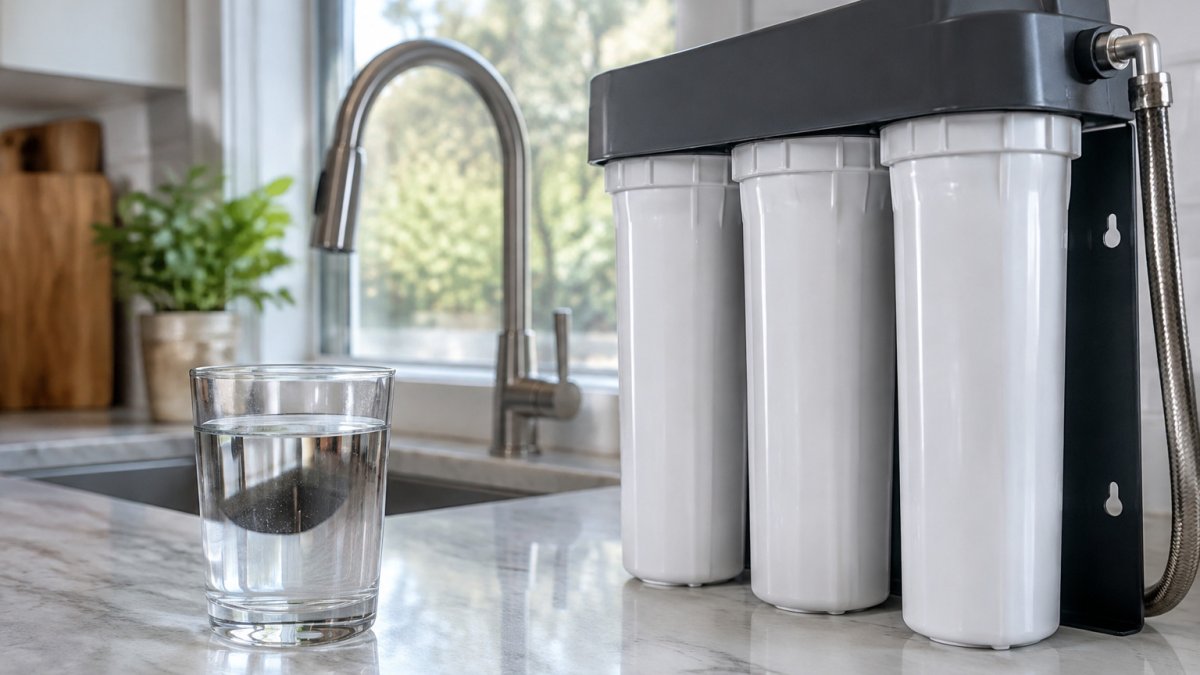
Under-sink point-of-use (difficulty 2/5): Moderate. Requires a shutoff valve, a tee, and cabinet space. A handy homeowner can complete it in one to two hours with basic tools.
Whole-house point-of-entry (difficulty 4/5): Higher. Needs a dedicated loop, bypass valve, drain considerations, and often a permit. Most jurisdictions treat a point-of-entry install as plumbing work; check local requirements before cutting the main line.
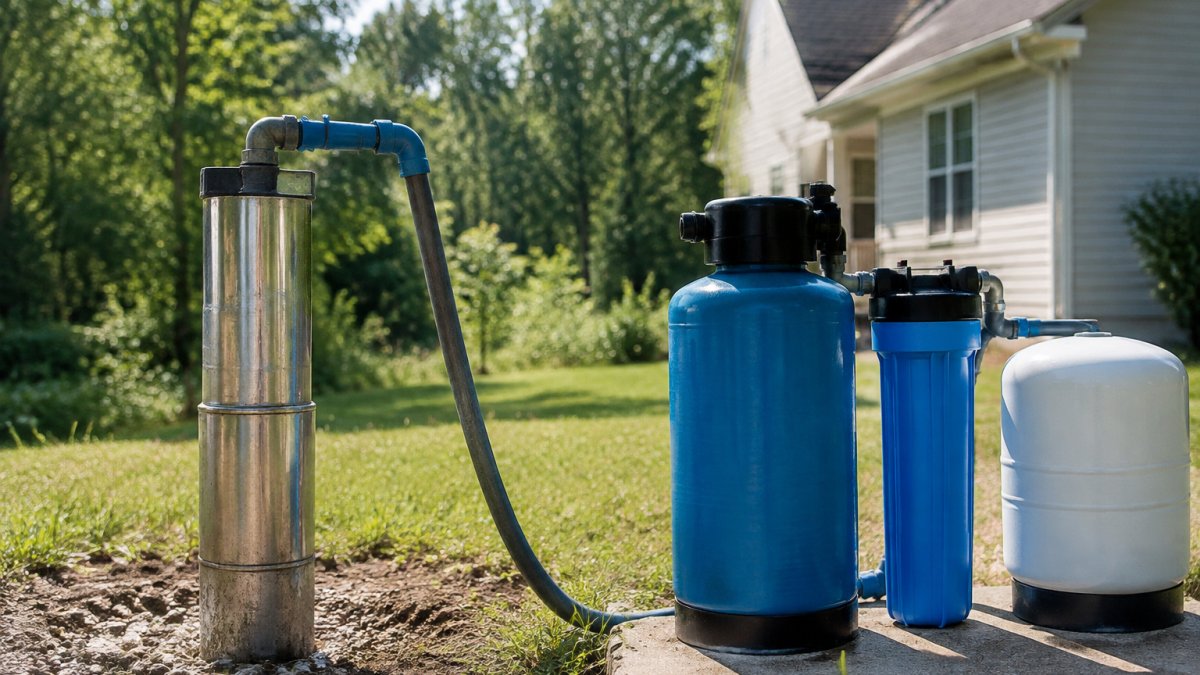
Well water integration (difficulty 5/5): Highest. Usually requires sediment pre-filtration and often a softener ahead of the carbon stage, plus pressure-tank and pump considerations.
The Pre-Filter Rule
A sediment pre-filter helps protect a carbon cartridge from premature clogging, especially on well water. A sediment pre-filter protects the media bed; install it first in the train.
If you are unsure which rating your line can carry, measure pressure at a hose bib with a pressure gauge before and after installation. That reading tells you more about whether the system is sized correctly than any spec sheet.
Your Carbon Water Filter Maintenance Schedule
Replacement intervals depend on water volume and contaminant load, not the calendar alone. Chlorine capacity is consumed by gallons treated, so a large household exhausts a cartridge faster than a small one.
Stage | Typical Interval | What to Check |
Sediment pre-filter | 3-6 months | Visible discoloration, pressure loss |
Carbon block cartridge | 6-12 months | Flow rate, taste change |
GAC bed media | 1-3 years | Media inspection, backwash function |
Whole-house housing O-rings | Annually | Cracks, seating, leaks |
It is helpful to record your cartridge model numbers at installation so replacements are easy to identify later.
Five-Year Cost Picture: Cartridges, Upkeep, and Appliance Savings
Most carbon filter guides stop at the purchase price. The number that actually decides whether a system pays for itself is the five- to ten-year total: cartridges, replacement housings, O-rings, and the appliance wear that untreated water accelerates. Here is how to build that number before you buy.
The Consumables Math
Carbon capacity is consumed by gallons treated, not by the calendar. A household of four using roughly 80-100 gallons per day treats about 30,000-36,500 gallons a year. A whole-house GAC bed rated for 100,000 gallons therefore lasts roughly three years; a 10-inch carbon block rated for 1,000-2,000 gallons lasts six to twelve months at point-of-use. Ask the manufacturer for the rated gallon capacity, then divide by your annual usage. That single calculation turns a vague replacement schedule into a real annual cost.
What Untreated Water Costs You
Chlorine and scale are the two line items homeowners underestimate. Scale buildup on a water heater's heating element reduces efficiency and shortens tank life; a replacement water heater typically runs $1,200-$2,500 installed. Dishwasher and washing machine replacement runs $600-$1,500 each. Chlorine also degrades rubber seals and gaskets in fixtures and appliances over time.
Building Your Own Five-Year Number
Get your water tested to establish chlorine, hardness, and sediment load.
Ask for the rated gallon capacity of every cartridge and media bed in the system.
Divide by your annual household usage to get replacements per year.
Multiply by current cartridge prices and add pre-filters, O-rings, and any professional service call.
Compare that total against the replacement cost of the appliances and fixtures in your home.
Watch out: a low install price paired with proprietary cartridges can cost more over five years than a higher-priced system using standard cartridges. Always price the consumables, not just the box.
Pricing depends on your water test results, household size, and installation conditions, so please contact Bevilacqua Pure through our website for current pricing or a quote. When comparing options, it can help to ask for the expected consumables cost over several years, not just the installation price.
Book Your Free Water Test Before You Choose a Filter
Testing first is the difference between a filter that works and one that just sits under the sink. Our free in-home water test is designed to help you understand what is in your water, and we explain the results in plain language with no pressure to buy.
We offer professional installation and customized solutions based on individual home needs. For a step-by-step walkthrough of contaminant removal, see our guide on how to remove forever chemicals from tap water.
Frequently Asked Questions
What are the downsides of using a carbon water filter?
Carbon filters have limits worth knowing. Standard carbon does not remove dissolved minerals, nitrates, or fluoride, and it is not effective against chloramine without a catalytic carbon media. Spent cartridges can release trapped contaminants if you skip replacements, and a clogged filter slows flow. Carbon also does not soften water, so scale on appliances continues unless you add a softener. Knowing your water source first tells you whether carbon alone is enough.
How often should you replace a carbon water filter cartridge?
Most whole-house carbon cartridges last 6 to 12 months, while under-sink and refrigerator cartridges often run 3 to 6 months. The real signal is gallon capacity plus your water quality: heavy sediment or high chlorine loads shorten life. Mark the install date, track pressure drop at the tap, and replace when flow slows or taste returns. A carbon water filter maintenance schedule built around your tested water beats a generic calendar.
Do carbon water filters remove essential minerals from drinking water?
No. Carbon works by adsorption, which grabs chlorine, volatile organic compounds, and taste and odor compounds, but it leaves calcium and magnesium in the water. That is different from reverse osmosis, which strips nearly everything and is often paired with a remineralization stage. If mineral content matters to you, carbon is the gentler choice, and a water softener handles hardness separately without removing minerals from your drinking glass.
Can a carbon filter improve the smell of well water?
Often, yes, but the cause matters. Carbon handles hydrogen sulfide odors at low levels, plus the earthy, musty notes from organic material. Strong sulfur smells or odors tied to bacteria may need pre-treatment such as oxidation or sediment filtration before carbon. Test the well first, then size the carbon stage to what the lab report shows. That is the difference between a filter that works and one you replace every few weeks.
The benefits of installing a carbon water filter only materialize when the system matches your water. Start with data, not a product page. Get started with Bevilacqua Pure and book your free water test so you can choose filtration based on what's actually in your water.

Comments