
7 PFAS Exposure Facts Every Expecting Parent Should Know

Quick Summary
PFAS exposure during pregnancy and infancy comes mainly from drinking water, food packaging, cookware and household textiles, and some PFAS can cross the placenta and appear in breast milk. Research links prenatal exposure to outcomes such as birth weight and preterm birth, but the evidence varies. Testing your water and using a certified filter are the most direct steps you can take.
Drinking water is one of the most significant PFAS exposure sources.
Some PFAS can cross the placenta, so a developing baby may be exposed before birth.
Check your utility's annual consumer confidence report for specific PFAS compounds and their ppt levels.
Choose filters certified to NSF/ANSI standards that cover the specific compounds found in your water.
Breastfeeding remains recommended for most families despite detectable PFAS in breast milk; discuss concerns with your pediatrician.
Table of Contents
What PFAS Are and Why They Are Called Forever Chemicals
Per- and polyfluoroalkyl substances, or PFAS, are a large family of man-made chemicals that resist heat, water and oil. Their carbon-fluorine bonds are among the strongest in chemistry, which is why they break down very slowly in the environment and the body. That persistence earned them the nickname "forever chemicals."
For expecting parents, the practical question is not chemistry but exposure. Many of these compounds accumulate in the blood over time, and research on their health effects is still developing. The information below focuses on what you can check and change at home.
How PFAS Enter the Body: Common Exposure Sources
Most people encounter PFAS through several routes at once. Drinking water is one of the most significant, along with food packaged in grease-resistant materials, nonstick cookware, stain-treated textiles and some firefighting foams. The U.S. Environmental Protection Agency's PFAS overview describes these pathways in detail.
Because exposure comes from many sources, no single change eliminates it. A useful approach is to identify the sources you control most easily, such as tap water, and reduce those first.
PFAS Effects on Pregnancy: Placental Transfer and Birth Outcomes
Some PFAS can cross the placenta, meaning a developing baby may be exposed before birth. Researchers have studied associations between prenatal exposure and outcomes including birth weight, preterm birth and maternal blood pressure. Associations found in studies do not prove that a given exposure caused a given outcome, and the strength of the evidence varies by compound and outcome.
Maternal Blood Pressure and Preeclampsia
Some observational studies have linked higher maternal PFAS levels with changes in blood pressure during pregnancy. Preeclampsia is a serious condition, so any concern here should be discussed with your obstetric provider. Your care team can help interpret your own history and risk factors.
Birth Weight and Preterm Birth
Several studies have reported associations between prenatal PFAS exposure and lower birth weight or preterm birth. These findings are not uniform across studies, and many factors influence birth outcomes. Treat them as reasons to reduce exposure where practical, not as a diagnosis.
PFAS in Breast Milk and Infant Feeding Decisions
PFAS can be detected in breast milk, and they can also be present in infant formula and water used to prepare it. Feeding decisions involve real benefits and real trade-offs, so no single answer fits every family. The American Academy of Pediatrics infant feeding guidance is a good starting point for discussing options with your pediatrician.
If you are concerned about exposure, ask your provider about the sources in your home. Preparing infant formula with filtered water is one step many families can take.
PFAS in Drinking Water During Pregnancy: Testing and Filtration Choices
Drinking water is the exposure source you can most directly measure and change, which is why it deserves more attention than a single line about utility reports. The practical sequence is: find out what your utility already knows, decide whether to test your own tap, then choose treatment that is certified for the specific compounds present.
Step 1: Read what your utility already reports
Community water systems publish an annual consumer confidence report, and since the EPA's drinking water regulations for PFAS set federal limits for several PFAS, utilities now report detections against those limits. Look for the specific compounds, PFOA, PFOS, PFHxS, PFNA, PFBS, and increasingly GenX chemicals (HFPO-DA), and the reported concentration in parts per trillion (ppt). A common pattern is a utility reporting "not detected" for some compounds while listing low-level detections for others; that is normal and does not mean the water is PFAS-free.
Watch out: utility data describes water leaving the treatment plant, not water at your kitchen tap. Older service lines, home plumbing, and private wells are outside that report, so a "clean" utility result can still differ from what you pour into a glass.
Step 2: Decide whether to test your own water
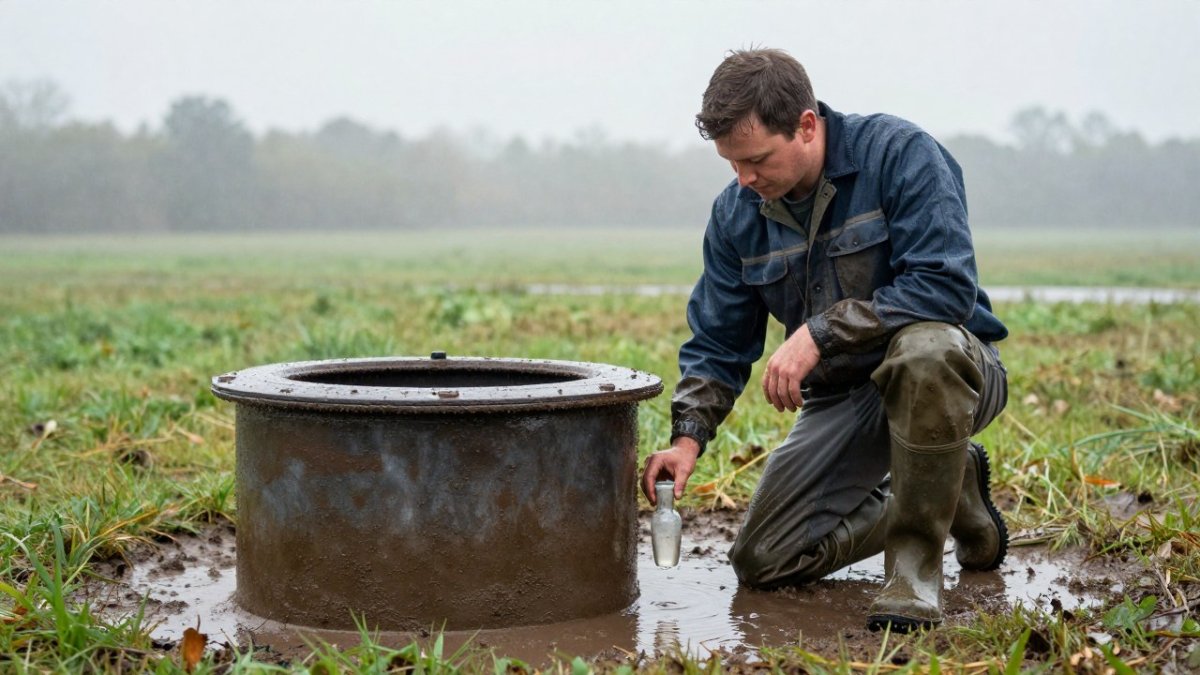
Testing makes the most sense if you are on a private well (which is not covered by federal utility rules), if your utility reports detections near or above the federal limits, or if you simply want a baseline before buying a filter. A laboratory test that reports individual PFAS compounds in ppt is more useful than a yes/no strip test, because treatment is chosen based on which compounds and concentrations are present. Many state environmental or health agencies publish lists of accredited labs; a common pattern is to use a lab that follows EPA drinking-water methods so results are comparable to utility data.
Step 3: Choose treatment that is certified for PFAS
Filtration is not one product category. The two mainstream options differ in scope and cost:
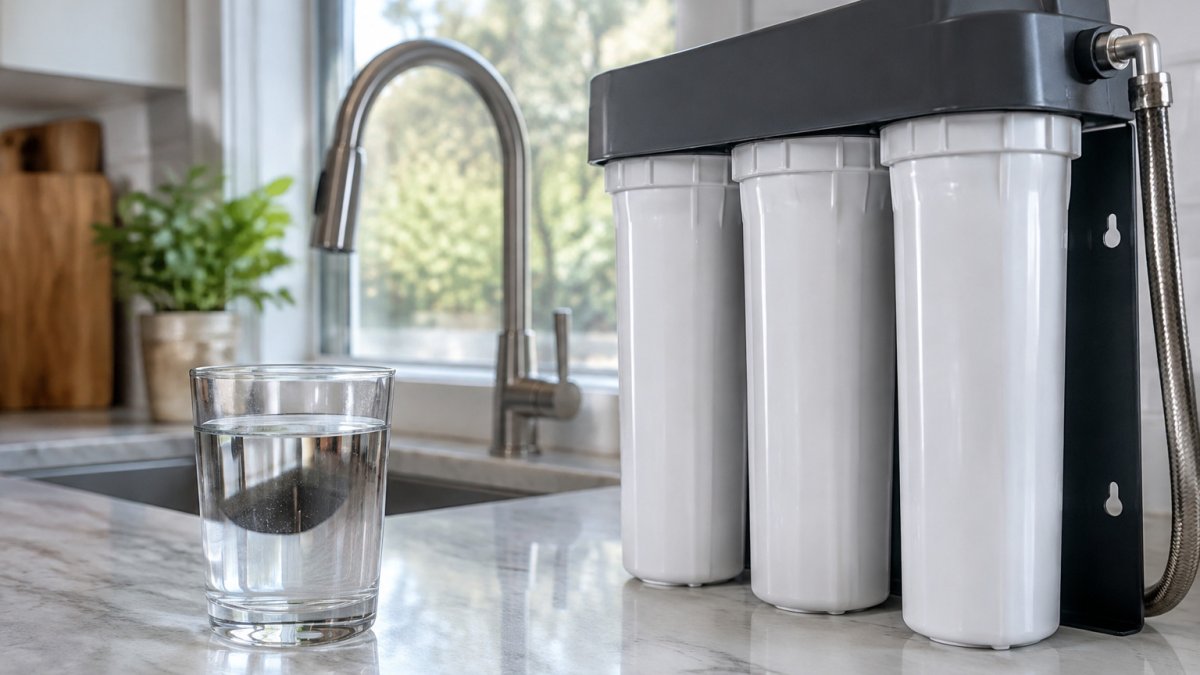
Point-of-use systems treat a single faucet, typically the kitchen tap used for drinking, cooking, and mixing formula. Under-sink reverse osmosis and certified carbon block filters are common choices. They are less expensive and simpler to maintain, but they do not protect water used for bathing or laundry.
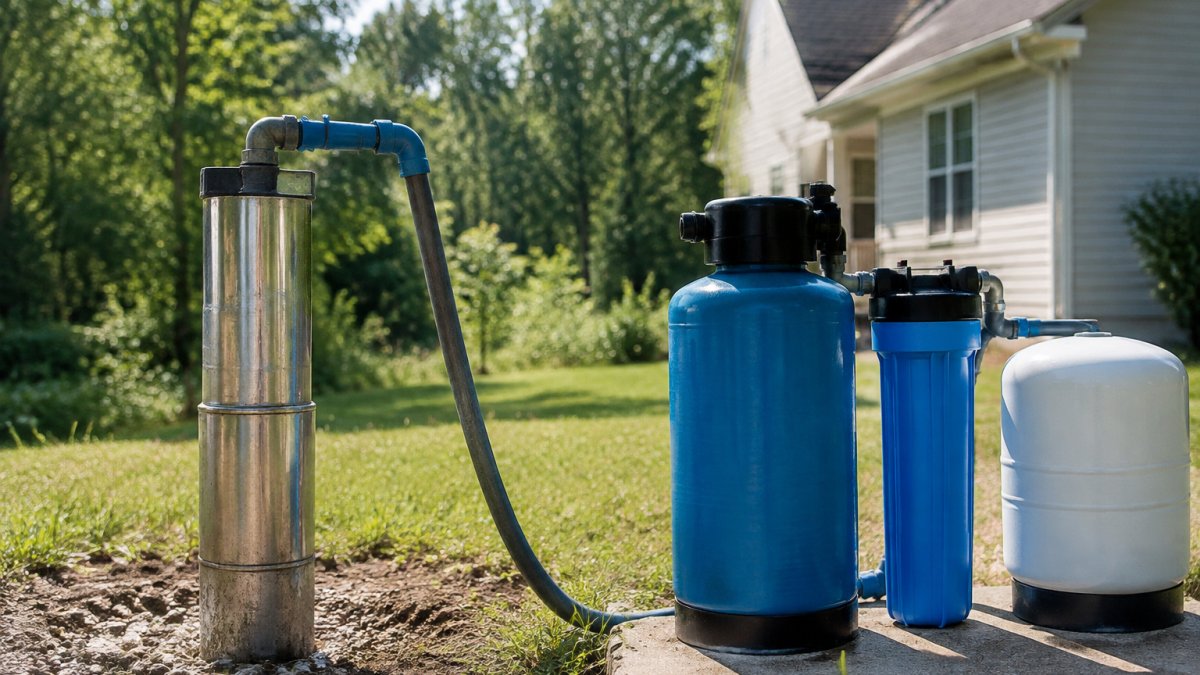
Whole-home (point-of-entry) systems treat all water entering the house. They cost more up front and require more maintenance, and they are the practical choice when you want broad reduction across every tap.
Look for certification to NSF/ANSI standards that specifically cover PFAS reduction, NSF/ANSI 53 for PFOA and PFOS, and NSF/ANSI 58 for reverse osmosis systems, and confirm the certification lists the compounds found in your water. A filter certified for PFOA and PFOS is not automatically certified for GenX chemicals or PFHxS.
Watch out: a filter labeled "removes PFAS" without a specific NSF/ANSI certification may have been tested only in-house. Ask for the certification listing and the compounds it covers before you rely on it during pregnancy or for preparing infant formula.
Step 4: Match the system to your results and your home
If your test shows only low-level detections of PFOA and PFOS, a certified point-of-use carbon or reverse-osmosis unit at the kitchen tap is often enough for drinking and formula preparation. If multiple compounds are present, or if you want protection across all household water uses, a whole-home system sized to your water chemistry is the more complete option. Bevilacqua Pure offers whole-home water filtration solutions built around each home's test results. For a deeper look at effectiveness across contaminant classes, read Does Whole House Filtration Remove PFAS & Heavy Metals?.
What treatment cannot do
Filtration reduces exposure from water; it does not remove PFAS already in the body, and it does not address food packaging, cookware, or textiles. Treat water treatment as one high-value step in a broader exposure-reduction plan, not a complete solution.
How to Interpret PFAS Exposure Tests and Biomonitoring
Biomonitoring measures PFAS in blood, and it tells you what has already entered your body. It does not, by itself, predict health effects for you. Lab reports list concentrations, often with reference ranges drawn from population studies, and those ranges describe what is common, not what is safe or unsafe for an individual.
When you receive results, ask your provider what the number means in context. A single test is a snapshot, and exposure can change as sources change.
Absolute Risk, Dose, and Strength of Evidence
Relative risk figures in news stories can sound alarming without a baseline. An association that doubles a small risk is still a small absolute risk. Dose matters too: the amount of exposure, how long it lasts and when it happens during pregnancy all shape what researchers can conclude.
Strength of evidence also varies. Some findings come from large cohort studies, while others rest on small samples or single measurements. Read claims with these questions in mind, and be cautious of any source that presents an uncertain finding as settled.
How to Reduce PFAS Exposure at Home During Pregnancy and Infancy
Most guidance on PFAS and pregnancy stops at describing associations. The more useful question is what to change first, because exposure comes from several routes at once and no single swap eliminates it. A practical approach is to rank sources by how much you control them and how much they likely contribute, then work down the list.

Start with the sources you can measure
Drinking water is the highest-value first step because you can test it, treat it, and confirm the result. To work through the process, see how to remove forever chemicals from tap water, step by step. Use filtered water for drinking, cooking, and, importantly during infancy, for preparing infant formula and for mixing concentrated liquid formula. For a thorough overview of treatment options, read the complete PFAS water treatment guide. Confirm the filter is certified for the PFAS compounds your test found, as described in the water section above. This is the one change where you can verify before and after.
Then address food contact and cookware
Diet is a meaningful exposure route, largely through grease-resistant packaging and some cookware:
Limit grease-resistant food packaging, microwave popcorn bags, some takeout containers, pizza boxes, and fast-food wrappers are common sources. Transferring food out of packaging and onto a plate soon after purchase reduces contact time.
Replace worn nonstick cookware, scratched or overheated nonstick pans are more likely to release coatings. Use stable surfaces such as stainless steel or cast iron for high-heat cooking, and avoid preheating an empty nonstick pan on high.
Favor fresh and minimally packaged foods where practical, since packaging is often the difference between two otherwise similar items.
Watch out: "PFAS-free" and "grease-proof" labels are not standardized the same way across products. A label claim is a starting point, not a guarantee, so treat it as one factor rather than proof of zero exposure.
Check textiles and household treatments
Stain- and water-resistant treatments on furniture, carpets, and outdoor gear are a recognized PFAS source, and they can shed into household dust, which matters more for infants who crawl and mouth objects. Practical steps include avoiding new stain-repellent treatments on furniture and carpets, ventilating and damp-dusting during pregnancy and infancy, and washing hands before feeding. For infant items, favor products without added stain or water repellents unless a specific need justifies them.
What to prioritize during infancy specifically
Infancy adds two considerations. First, formula preparation water matters because infants drink a large volume relative to body weight, filtered water is the practical step. Second, breastfeeding remains the recommended feeding choice for most families despite detectable PFAS in breast milk, because the documented benefits of human milk are substantial and the evidence does not support switching away from breastfeeding solely because of PFAS. Families with specific concerns should discuss them with their pediatrician rather than making a change based on a single study.
Set realistic expectations
These steps reduce exposure; they do not eliminate it, and they cannot undo past exposure. Blood PFAS levels fall slowly after sources are reduced, so the goal is lower ongoing exposure over time, not a rapid drop. A reasonable plan is to fix water first because it is measurable, then packaging and cookware, then household textiles, and to revisit the plan if your water test or living situation changes.
Bevilacqua Pure can walk you through options for your specific water supply. Book your free water test to start with a clear picture of what your home's water contains.
The steps below rank common exposure sources so you can tackle the most controllable ones first.
Exposure source | Action | Note |
Drinking water | Use filtered water for drinking, cooking and formula | Confirm filter is certified for the compounds your test found |
Grease-resistant food packaging | Move food onto a plate soon after purchase | Includes popcorn bags, takeout containers, pizza boxes |
Worn nonstick cookware | Replace scratched or overheated pans | Use stainless steel or cast iron for high heat |
Stain-treated furniture and carpets | Avoid new stain-repellent treatments | Dust can carry PFAS to infants who crawl |
Infant formula preparation | Prepare formula with filtered water | Infants drink a large volume relative to body weight |
Breastfeeding | Continue unless your pediatrician advises otherwise | Documented benefits of human milk remain substantial |
Booking Your Free Water Test to Check Your Home's PFAS Levels
Knowing what is in your water is the first step toward choosing the right protection. Bevilacqua Pure offers a free in-home water test, with plain language explanation of results and a pressure-free consultation. Recommended solutions are built around your home rather than a generic filter.
Ready to learn what is in your water? Book your free water test with Bevilacqua Pure.
Frequently Asked Questions
Can PFAS cross the placenta during pregnancy?
Yes. Research has detected PFAS in umbilical cord blood, which shows that these chemicals can move from the mother's bloodstream across the placenta to the fetus. Studies have measured PFAS in cord blood at levels related to maternal blood levels, although the amount transferred varies by compound. Because the evidence comes mainly from observational studies, researchers are still working to understand how much transfer leads to health effects. Pregnant people concerned about exposure can talk with their obstetrician and consider testing their home water supply.
Can PFAS be found in breast milk or infant formula?
PFAS have been detected in breast milk in several studies, which means infants can be exposed through breastfeeding. Infant formula exposure depends largely on the water used to mix it, so families on private wells or with known contamination may want to check their water source. The health benefits of breastfeeding are well established, and most public health guidance continues to support it. Parents should weigh these facts with their pediatrician rather than stop breastfeeding based on PFAS findings alone.
How can pregnant people reduce PFAS exposure from drinking water?
Start by testing your water so you know whether PFAS are present and at what level. If they are, a filtration system certified to reduce PFAS, such as reverse osmosis or activated carbon designed for PFAS, can lower levels at the tap. Use treated water for drinking, cooking, and preparing infant formula, and replace filter cartridges on schedule so the system keeps working. Bottled water is an alternative only if its label confirms PFAS testing and treatment.
Comments