
7 Facts About PFAS Filter Media Disposal Impact

Last Updated: November 18, 2026
Quick Summary
Spent pfas filter media is a concentrated waste stream, and its disposal route determines whether captured PFAS stay contained or migrate into soil, air, or landfill leachate. Landfill, incineration, thermal reactivation, and regeneration each handle the compounds differently, so the media type and contaminant load should guide the choice.
Spent PFAS filter media keeps the captured compounds and must be handled as a concentrated residual.
Landfill contains PFAS but depends on liners, leachate collection, and long-term monitoring.
High-temperature incineration aims to destroy fluorinated compounds, but temperature and off-gas treatment matter.
Ask any disposal handler for the final facility name, treatment step, and permit status in writing.
Table of Contents
Why PFAS Filter Media Disposal Matters More Than Most Homeowners Expect
How PFAS Removal Technologies Trap Contaminants in Filter Media
Spent Activated Carbon PFAS Disposal: What Happens to the Carbon
PFAS Ion Exchange Resin Disposal and Its Environmental Trade-Offs
Comparing Disposal Routes: Landfill, Incineration, Thermal Treatment and Regeneration
A Media-Specific Decision Framework for Choosing a Disposal Path
PFAS Destruction and Disposal Guidance: Regulatory Context and Monitoring
Most homeowners who install a PFAS filter think about the clean water coming out of the tap, not what happens to the filter media once it is spent. That is a gap worth closing. Spent media disposal belongs to the treatment decision, because the disposal route can shift contaminants from the water into soil, air, or landfill leachate. The keyword environmental impact of pfas filter media disposal is easy to overlook, yet it determines whether a filtration plan is complete. This guide walks through the disposal routes, the media-specific risks, and the questions to ask before you choose a system.
Per- and polyfluoroalkyl substances, or PFAS, are a family of synthetic chemicals that resist breakdown in the environment, which is why they are often called forever chemicals. When a filter captures them, the contaminant does not disappear. It concentrates in the media, and that concentrated load has to go somewhere. Current federal guidance from the U.S. Environmental Protection Agency PFAS resources addresses both drinking-water treatment and the handling of residuals, so disposal belongs in the planning conversation from the start.
Why PFAS Filter Media Disposal Matters More Than Most Homeowners Expect
A filter that removes PFAS from your water is, in effect, a collection device. Over its service life, the media accumulates the compounds it pulled out of the water. When the media is exhausted, it is no longer a simple household item. It is a concentrated waste stream that may need specialized handling.
Many homeowners assume the filter cartridge is inert trash. In practice, the disposal route can matter as much as the filtration technology itself. A well-designed system that ends in an improper disposal path simply moves the problem out of the tap and into another part of the environment.
How PFAS Removal Technologies Trap Contaminants in Filter Media
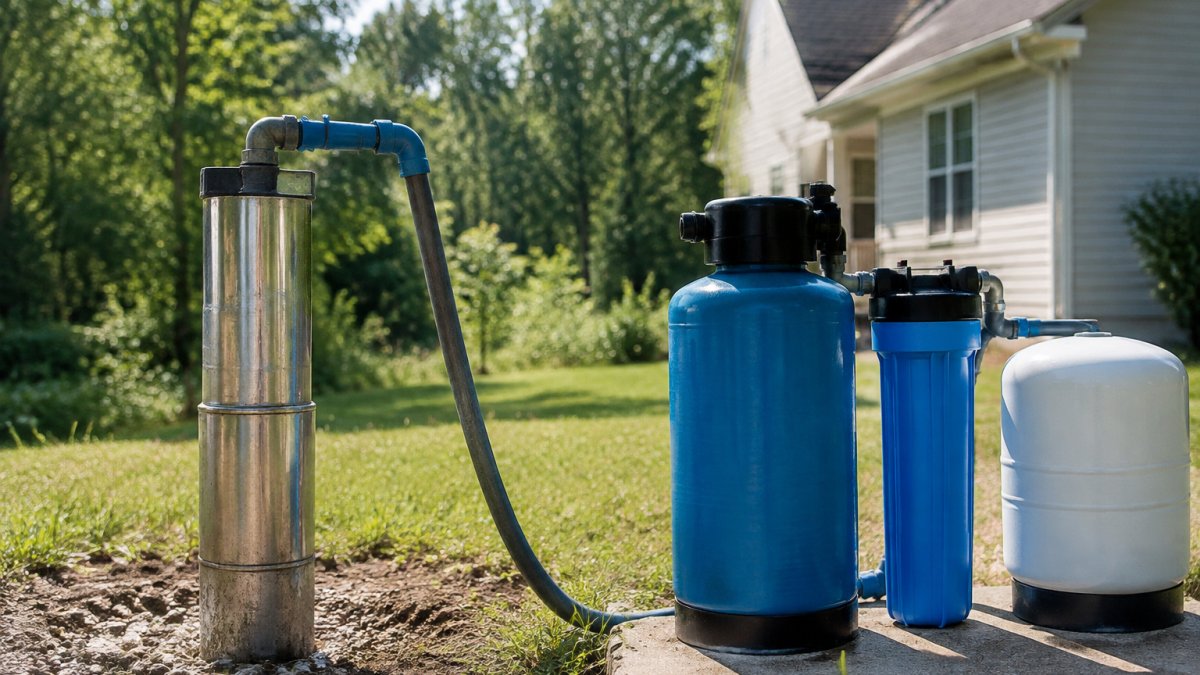
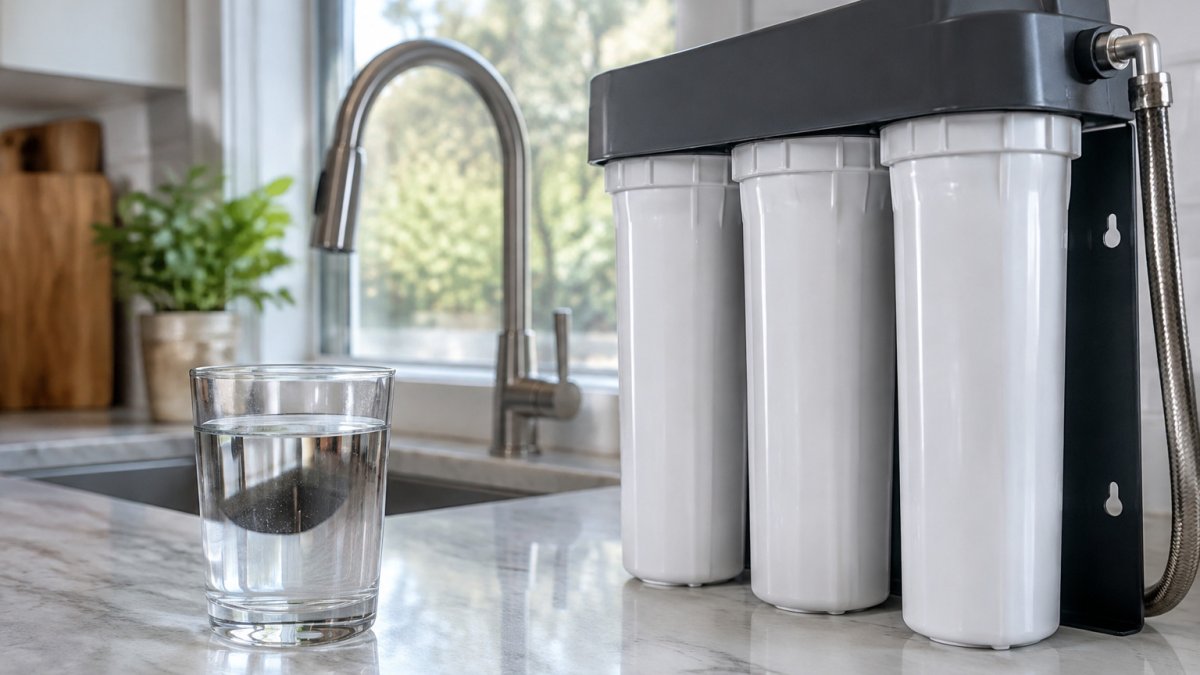
Different removal technologies hold PFAS in different ways, and that difference shapes the disposal question. Granular activated carbon adsorbs PFAS onto a porous surface. Ion-exchange resins swap the target compounds for an ion attached to the resin. Reverse osmosis membranes separate contaminants through a fine barrier, leaving a concentrated reject stream as well as the membrane itself.
Each method produces a different kind of spent material. Understanding which media you have is the first step in judging its disposal risk. We recommend confirming the media type with your installer before the system goes in, not after it is spent.
Spent Activated Carbon PFAS Disposal: What Happens to the Carbon
Spent granular activated carbon is the most common PFAS-laden residual in residential and small-system treatment. The carbon holds the contaminants on its surface, so a spent bed can carry a meaningful load of PFAS even though it looks unchanged.
Watch out: carbon that is simply landfilled may leach captured compounds over time, depending on local landfill conditions. Ask whether the disposal plan accounts for that risk rather than assuming a landfill is a permanent endpoint. Our guide on detecting forever chemicals and preventing mineral buildup can help you judge when media needs replacing.
Thermal reactivation is one pathway that restores carbon for reuse, while high-temperature incineration aims to destroy the compounds outright. Both have trade-offs in energy use and emissions, and neither is automatically the right choice for every household.
PFAS Ion Exchange Resin Disposal and Its Environmental Trade-Offs
Ion-exchange resins behave differently from carbon. The resin beads capture PFAS through ion exchange, and when they are spent, they are typically replaced rather than reactivated at the household level. The disposal question becomes whether the resin and its captured load are handled as a regulated waste or as ordinary solid waste.
For residential use, the practical question is the resin's concentration and the local waste rules, not the resin's appearance. Expect that disposal may require a specific waste handler, and confirm that handler's procedures before committing to a system.
Comparing Disposal Routes: Landfill, Incineration, Thermal Treatment and Regeneration
No single disposal route fits every media type, and the differences between routes are not cosmetic. Each pathway moves PFAS through a different physical and chemical environment, which changes how much of the contaminant is destroyed, how much is contained, and how much can migrate. The table below summarizes the common pathways on the factors that matter most, followed by a closer look at the mechanisms behind each one.

Disposal Route | What Happens to the PFAS | Main Advantage | Main Drawback | Typical Media |
Landfill (non-hazardous or dedicated cell) | Largely contained; some fraction may partition into leachate | Familiar, widely available, low handling complexity | Containment depends on liner, cover, and leachate collection; long-term monitoring required | Spent carbon, cartridges, some resins |
High-temperature incineration | Intended thermal destruction of the fluorinated chain | Potentially destructive rather than storage | Energy use, stack emissions, and ash residuals require oversight | Carbon, resin, membrane concentrates |
Thermal reactivation | Desorbs and destroys captured organics while restoring carbon porosity | Restores carbon for reuse and reduces waste volume | Requires qualified facilities and off-gas control | Granular activated carbon |
Regeneration (chemical or thermal, resin-specific) | Strips PFAS from resin into a concentrated regenerant stream | Extends media life and lowers replacement frequency | Not suitable for every resin or load; creates a concentrate to manage | Certain ion-exchange resins |
Landfill. Landfilling is the default for many spent cartridges because it is available and inexpensive to arrange. The environmental question is not whether PFAS disappears, it does not, but whether the landfill's liner, cover, and leachate collection system keep the compounds out of groundwater. Modern Subtitle D landfills are engineered with composite liners and leachate collection, and leachate is typically sent to a wastewater treatment plant. That plant may not fully remove PFAS, which is why some practitioners treat landfill as containment with a monitoring obligation rather than a permanent endpoint.
High-temperature incineration. Incineration is the only common route that aims to break the carbon-fluorine bond rather than store it. Destruction depends on temperature, residence time, and off-gas treatment; if any of those are insufficient, fluorinated compounds can exit in stack emissions or remain in ash. Ask a prospective handler what temperature their unit reaches, how off-gas is treated, and whether ash is tested before disposal. A handler who cannot answer those questions is not offering verified destruction.
Thermal reactivation. Reactivation heats spent carbon in a controlled atmosphere to drive off adsorbed organics and restore porosity. It reduces waste volume and returns carbon to service, but the desorbed PFAS leave in the off-gas and must be destroyed or captured. Reactivation is therefore a media-reuse strategy with a destruction step attached, not a disposal route on its own.
Regeneration. Some ion-exchange resins can be regenerated in place, which strips PFAS into a small, highly concentrated regenerant stream. That stream is often the hardest residual to manage because it is liquid, concentrated, and not amenable to landfill. Regeneration lowers the frequency of resin replacement but shifts the disposal burden to the concentrate.
Life-cycle trade-offs. A full comparison weighs transport distance, energy demand, emissions, destruction efficiency, residual ash or concentrate, and the potential for release during handling. Landfill is transport-light but containment-dependent; incineration is destructive but energy- and emissions-intensive; reactivation and regeneration reduce virgin media demand but create their own residuals. No route wins on every axis, which is why the right choice depends on the media, the load, and the facilities actually available to you.
Watch out: a handler who quotes a single "disposal" price without naming the destination facility, the treatment step, and the residual management plan is likely brokering the waste rather than controlling its fate. Ask for the facility name and permit status before you commit.
A Media-Specific Decision Framework for Choosing a Disposal Path
Here is a practical sequence we use to frame the choice:
Identify the media type. Carbon, resin, and membrane residuals each call for different handling.
Estimate the contaminant load. Ask for the expected PFAS concentration in your source water, if testing is available.
Check local waste rules. Your state environmental agency and municipal waste authority set the requirements that apply to you.
Compare disposal routes against the load. A higher load generally justifies a more destructive pathway.
Confirm the handler's documentation. Request written confirmation of how the spent media will be processed.
This sequence keeps the decision anchored to the specific media in your system, not to a generic recommendation.
PFAS Destruction and Disposal Guidance: Regulatory Context and Monitoring
Regulation around PFAS residuals is still developing, and the rules that apply to a spent filter depend on the media, the waste classification, and the state. The EPA interim guidance on PFAS destruction and disposal describes the destruction and disposal technologies the agency currently recognizes and the research gaps that remain, and it is explicit that the guidance is interim and expected to evolve. The Resource Conservation and Recovery Act (RCRA) governs how solid and hazardous waste is managed, and the Toxic Substances Control Act (TSCA) governs reporting and handling of certain PFAS. States frequently add their own residuals requirements, landfill acceptance limits, and monitoring obligations on top of the federal floor.
For a homeowner or small-system operator, the practical consequence is that "spent filter media" is not a single waste category. A cartridge that a landfill accepts in one state may be refused in another, and a resin that a handler treats as non-hazardous may require a different manifest if the generator's characterization changes. Confirm the classification with your state environmental agency and with the receiving facility before the media is removed, not after.
Post-disposal monitoring and verification. This is the part of the process most often skipped, and it is where a disposal plan becomes a documented one. A workable verification sequence looks like this:
Characterize before shipment. Record the media type, mass, moisture content, and any available PFAS concentration data from source-water testing or media analysis. Characterization is the basis for the waste classification and for the handler's acceptance decision.
Document the chain of custody. Use a manifest or bill of lading that names the generator, the transporter, and the receiving facility, with dates and signatures at each handoff. Keep copies for the period your state requires.
Confirm the destination and treatment step. Ask the receiving facility to confirm in writing whether the media will be landfilled, incinerated, reactivated, or regenerated, and which unit performs the treatment.
Request emissions and leachate monitoring data where available. For incineration, ask for stack test results or the facility's permit limits for fluorinated compounds. For landfill, ask how leachate is collected and treated and whether the facility monitors for PFAS.
Verify destruction or containment. For destructive routes, ask for the facility's destruction efficiency documentation or ash testing results. For containment routes, ask for the liner and leachate collection specifications and the monitoring schedule.
Close the loop on treated water. After media replacement, retest the treated water to confirm the new media is performing as expected. A replacement that does not restore effluent quality can indicate a handling or installation problem.
Verification is not a certificate that PFAS no longer exists; it is a record that the material reached a known facility, underwent a known treatment, and was monitored under a known permit.
Watch out: a manifest that lists only a broker as the destination does not tell you where the waste actually went. Insist on the name and permit status of the final treatment or disposal facility, and keep that record with your replacement log.
Costs, Procurement and Operational Handling of Spent Media
Pricing depends on quantity, delivery, and the disposal pathway chosen. For current pricing or a quote, contact Bevilacqua Pure directly.
Choosing a Household Filter Plan That Limits Disposal Risk
For most households, the best plan starts with testing rather than equipment. A water test shows which contaminants are actually present, which in turn determines the media, the replacement interval, and the disposal burden. Plain-language explanation of water test results is available before any system is recommended.
When you review a whole-home treatment plan, ask how the spent media will be handled at each replacement and who is responsible for it. A plan that answers those questions clearly is one you can trust. If you would like to start with the facts about your own water, book a free in-home water test with Bevilacqua Pure and we will walk through the results with you, with no pressure to buy. You can also review whole-home water filtration options that serve Worcester County and nearby communities.
Frequently Asked Questions
How long does PFAS stay in the environment?
PFAS are called forever chemicals because their carbon-fluorine bonds resist breakdown by heat, water, sunlight and microbes. Many PFAS compounds persist in soil and groundwater for decades, and some remain for far longer. This persistence is why disposal decisions matter: a filter cartridge that is sent to an unlined landfill can keep releasing PFAS over a long period, so the disposal route should be chosen with that timeline in mind.
How should PFAS-contaminated filter media be disposed of?
Spent media should be handled as a potentially PFAS-laden waste, not as ordinary household trash. Options include regeneration or reactivation, thermal destruction at a facility designed for PFAS, and landfill disposal in a lined cell. Each route has different risks, and the right choice depends on the media type, PFAS concentration and what the local waste authority and permitting agency allow. Ask your provider for their written disposal plan before service.
Does landfill disposal destroy PFAS?
No. Landfilling isolates PFAS rather than destroying it. Leachate from a landfill can carry PFAS into groundwater if the liner or leachate collection system fails, so landfill disposal shifts the risk over time rather than eliminating it. Thermal destruction at high temperatures is the approach most often cited for breaking the carbon-fluorine bonds, though it requires specialized facilities and careful emissions monitoring.
Comments